
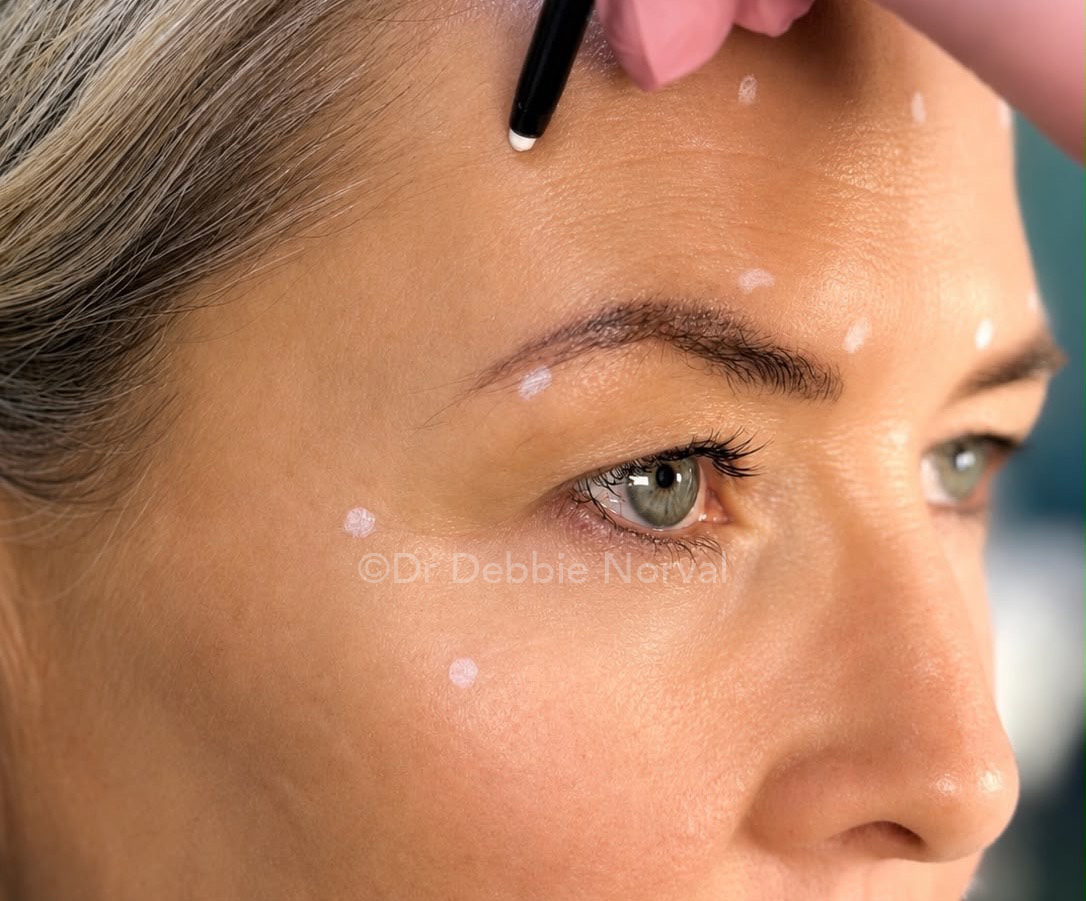
A smooth forehead is not necessarily a natural-looking forehead. When it comes to botulinum toxin treatments, preserving the expressions that make a face recognisable can be just as important as softening the lines that develop with age. Aesthetic medical practitioner Dr Debbie Norval explains why achieving natural results requires an understanding of facial anatomy, individual muscle activity and careful dosing, and why the increasingly popular concept of ‘Baby Tox’ isn’t always the answer.
The pendulum has swung, and most patients no longer want to look frozen and shiny after a botulinum toxin treatment. More and more patients ask me for natural results. At first, that sounds like an oxymoron. How can something as “unnatural” as a toxin produce natural-looking results?
The answer is that it absolutely can!
Firstly, botulinum toxin is, in fact, naturally produced. Like many modern drugs derived from nature, it originates from a substance produced by the bacterium Clostridium botulinum. In the tiny, carefully controlled doses we use medically, it acts as a neuromodulator, relaxing overactive muscles. It has been used in medicine for decades as a muscle relaxant. When the muscles of our faces become more “busy” and hyperactive with age, betraying our every emotion, it’s great to know we have a way to relax them.
But its natural origin isn’t what makes a result look natural. That comes down to how we use it.
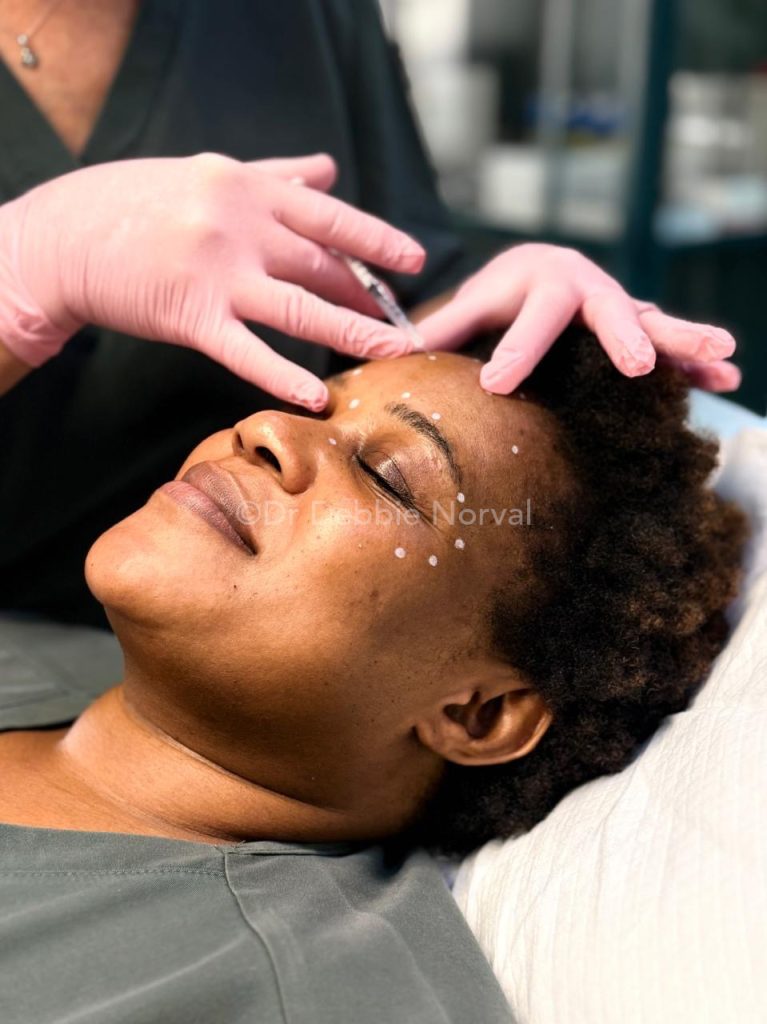
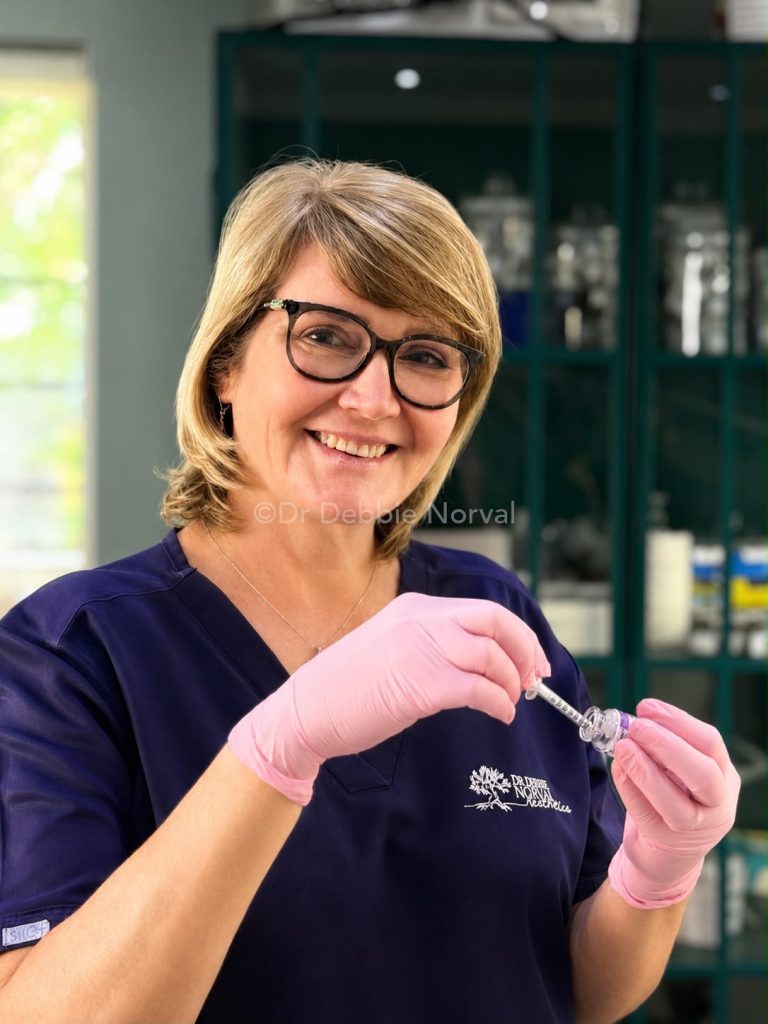
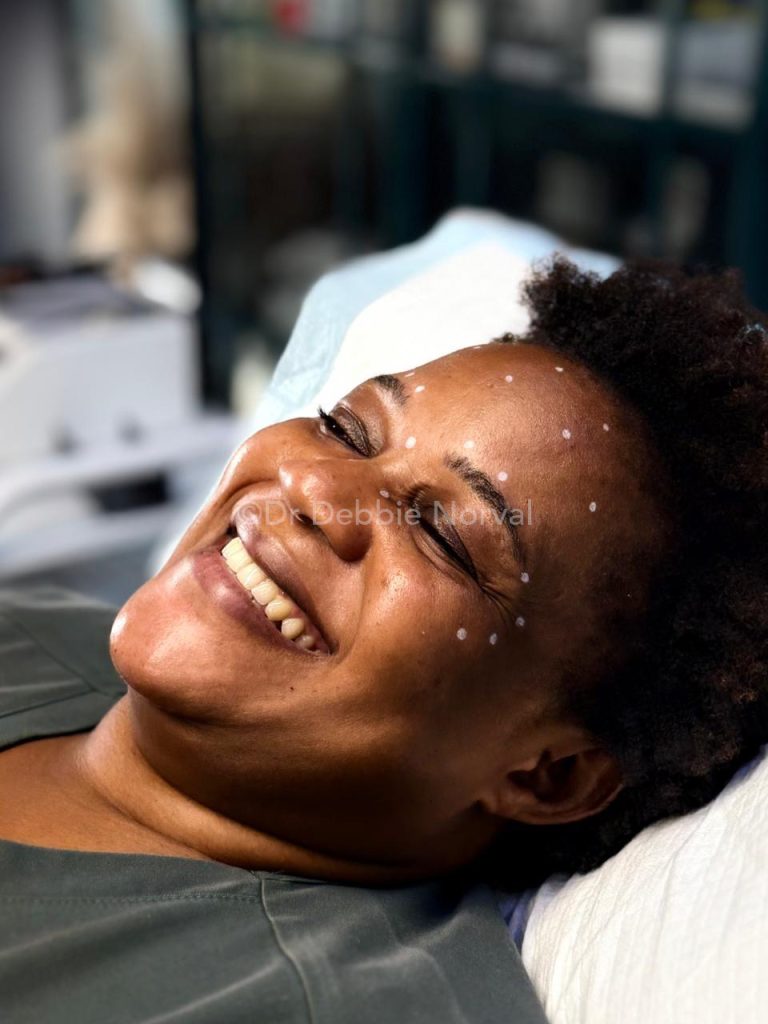
What do patients really mean when they ask for “natural tox”?
Usually, they mean they don’t want to look frozen, expressionless, shiny or overdone. The comment I hear most often is, “I don’t want to look like Nicole Kidman!” Sorry, Nicole!
What most patients actually want is to prevent static lines without losing dynamic expression.
Static lines are the wrinkles that remain visible even when your face is at rest. Repetitive muscle contractions, in skin that is slowly getting thinner, contribute to these lines until they become literally etched into your skin. They reveal every past emotion we’ve expressed over time, and can unfortunately make us look tired, worried, angry or drawn, even when we feel perfectly happy.
Dynamic lines only appear when you move, when you smile, laugh or frown. They are present even in the young, and they are not “the enemy”. They are part of what makes a face warm, expressive and uniquely yours.
My goal is not to erase movement. It is to soften the development of static lines while preserving natural facial expression.
So how do we achieve that?
• Treat the individual, not a formula. Every face is different. Rather than following a “paint-by-numbers” protocol, I assess each patient’s unique muscle pattern and strength and tailor the treatment accordingly. I try my best not to change a person’s unique features.
• Watch the face in conversation. Assessment starts while we’re chatting. How do you smile? What happens around your eyes when you laugh? Which muscles do you use while talking? These spontaneous expressions tell me things that a deliberate frown or raised eyebrow might not. I want to soften the lines without losing the expressions that belong to you.
• Respect muscle balance. Many facial muscles work in opposing pairs. For example, the muscles between the eyebrows pull downward while the forehead muscle lifts upward. Treating these muscles together maintains natural balance and gives a harmonious result. Treating only one side of that equation can create an unnatural lift, heaviness or even the classic “Mr Spock” eyebrow.
• Recognise when a muscle is doing useful work. Some patients unconsciously use their forehead muscle to help hold up low brows or compensate for drooping eyelids. Relaxing that muscle too much can make their eyes feel even heavier. Sometimes a few forehead lines are a worthwhile trade-off. A completely smooth forehead isn’t the best result when the price is heavy eyebrows.
• Use the right dose, precisely. Natural results come from the right dose in the right muscles at the right depth. I like to give the dose I think will work for an individual muscle group, even if it might sometimes be different to the recommended dose. The secret is precision. At follow-up, once the treatment has had time to work, I might adjust the dose upwards if needed. It’s much easier to add neurotoxin than to take it away! In my practice, patients very often get a good result with a lower dose, saving money while still getting a pleasing outcome.
• Respect the differences between the two sides. Our faces are not meant to be perfectly symmetrical. One eyebrow may sit higher, or one side of the mouth may pull more strongly. I assess each side individually while keeping the whole face in mind. For natural results, one needs to respect and embrace asymmetry. That’s what makes you You, and it’s what your family and friends know and love.
• Preserve the happy lines. Not all lines need erasing. The muscle around the eyes helps create that lovely eye crinkle when we smile. Excessive relaxation, particularly around the lower crow’s feet, can change the way the cheeks and eyes move together. I would rather slightly soften those lines than remove every trace of a happy smile.
• Treat the less obvious areas. Sometimes the most natural-looking rejuvenation comes from treating areas that don’t immediately announce you’ve had a treatment. The Nefertiti Lift, for example, relaxes selected areas of the platysma muscle along the jawline and upper neck, reducing its downward pull. This allows the elevator or smile muscles to lift more effectively as they have lost their competition.
• Use intradermal techniques where appropriate. In selected areas, neurotoxin can be injected within the skin rather than into the muscle. This can improve skin texture and fine lines while preserving more movement than traditional intramuscular injections. With careful patient selection and dosing, intradermal techniques can be useful over muscles that sit very close to the skin, such as the orbicularis oculi around the eyes and the platysma on the neck.
• Know when more botulinum toxin isn’t the answer. Not every line is caused by muscle movement. Sun damage, loss of elasticity and changes in facial volume also play a role, and sleep lines are not caused by muscle contraction at all. In these cases, increasing the dose sacrifices movement but without improving the lines. Sometimes we need to address skin quality or another underlying cause instead.
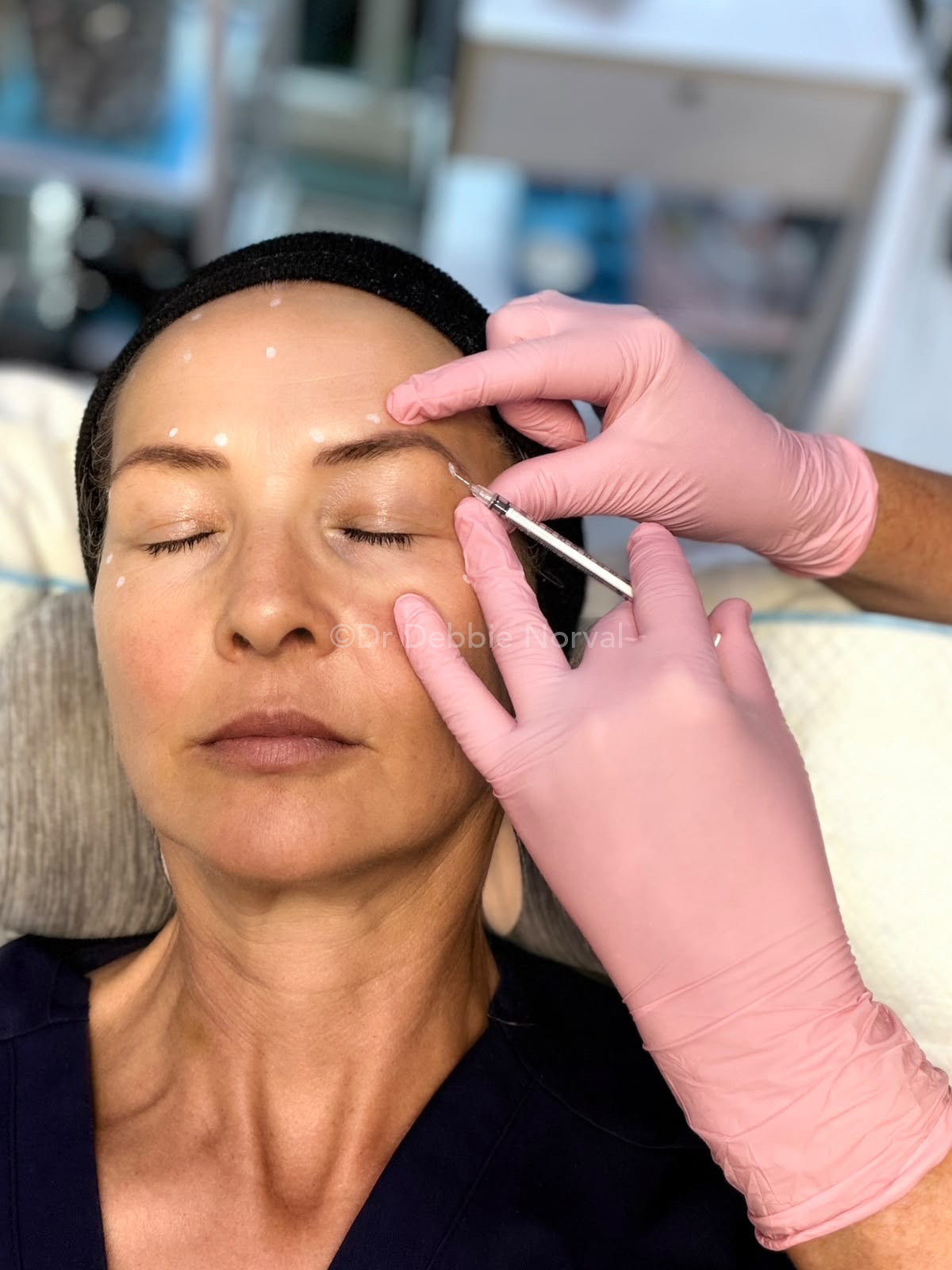
Doesn’t Baby Tox give more natural results?
One misconception I’d like to clear up is that “Baby Tox” automatically means a more natural result. Not necessarily. While lower doses may suit some patients, under-dosing can give a less effective result and a shorter duration of effect.
Baby Tox is a term that refers to using very low or half the recommended doses. This lasts around six weeks, meaning patients are back for more within two months.
Repeated treatment at very short intervals is considered a potential contributor to botulinum toxin resistance. This is an unfortunate condition where the body produces antibodies to the toxin and the treatment no longer works. Patients who want const