
Brain health is often overlooked until something feels “off”, yet it plays a central role in how we think, feel, and function every day. In this article, Matthew Furlonger explores how cognitive performance, emotional resilience, and long-term brain health can be strengthened through a more personalised and strategic approach. By shifting focus from reactive care to proactive prevention, he explains how building “brain reserve” may support clarity, mood, and independence for years to come.
If you could improve just one of these…
Which would make the biggest difference to your life: your skin, weight, hair, muscles… or your brain?
Easy question, right?
Most of us would choose our brain – the organ behind every thought, emotion, decision, and connection we make. When the brain struggles, everything downstream tends to suffer: energy, mood, clarity, relationships, work performance, and even independence as we age. And when we strengthen the brain, we strengthen the foundation that supports everything else.
Yet how well do we look after it?
The most common answer I hear (usually with an embarrassed smile) is: “Not nearly enough.”
Many of us invest heavily in skincare, anti-ageing routines, supplements, and hair treatments, while our brain barely gets a second of thought in the middle of all of it.
The first signs we haven’t been prioritising brain health aren’t dramatic either. They’re subtle. Brain fog, a shorter fuse, feeling more overwhelmed or irritable than usual, or memory that doesn’t feel as sharp. Sometimes it shows up in specific seasons of life, like ‘mum brain’, perimenopause brain fog, or ADHD-style difficulty focusing and switching off.
But what would happen if we gave the brain the same time, attention, and strategy we give our appearance?
Imagine your focus is sharper, your mood more stable, your motivation more consistent, your stress tolerance higher and your memory back to where it was years ago. For many of us, that isn’t a “nice-to-have”. It’s life-changing.
What’s exciting is that, with today’s research and tools, brain improvement and the prevention of cognitive decline are more possible than ever. So why aren’t we all jumping at it?
Two reasons sit at the heart of it:
First, most people don’t realise how much influence they have over brain function across a lifetime.
Second, we can’t see our brain, so we tend to ignore it until something feels “wrong”.
When we understand what’s possible and how central the brain is to our wellbeing and longevity, we start to treat it differently. And the better we treat it, the better it tends to treat us back, especially as we age. A recent paper put it plainly: “The brain functions as the rate-limiting organ of longevity.”
With that in mind, the rest of this article will give you a practical, brain-first framework and a clear starting point if you want to protect mood, memory and independence later in life, long before cognitive decline becomes a real concern.
Building Brain Reserve
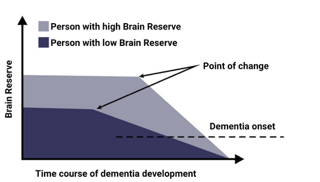
Once you start paying attention to brain health, the next question is: what exactly are we trying to improve? One of the most useful concepts is something Dr Daniel Amen calls Brain Reserve – the brain’s capacity (structure and function) to perform well and stay resilient under stress, ageing, and illness.
In other words, Brain Reserve is your brain’s buffer, and like any buffer, it can be eroded or strengthened.
Brain Reserve can be depleted by the things most of us are exposed to over time: poor sleep, chronic stress, inflammation, metabolic and hormone disruption, toxins, illness, and head injuries. This can begin to show up as brain fog, memory slips, persistent struggles with mood or increased stress sensitivity.
But the hopeful part is this: regardless of age, genetics and your history, we can improve it in meaningful ways.
A major lifespan review describes many of these common threats as acting “in a cumulative and gradual manner.”
That’s important because it means brain health rarely changes overnight. There are evidence-based interventions we use that can significantly accelerate this process, but beyond this, it changes through small daily choices that compound, either in your favour or against you.
So if you want to build Brain Reserve, protect your memory as you age, and reduce your risk of dementia, the goal isn’t “doing everything and hoping for the best.” It’s identifying the specific risk factors that apply to you, then making small, targeted refinements that add up over time.
Precision & Personalisation vs Generic Guesswork
That raises a practical question: how do you identify your biggest levers?
Because when it comes to the brain, generic advice can miss the mark. It can waste months of effort, money, and motivation, and sometimes it can unintentionally make things worse. For example, stimulating strategies to increase focus for someone whose nervous system is already overactivated, or calming strategies that don’t address the real driver of anxiety.
Many of us end up cycling through supplements, wellness trends, and influencer recommendations without a clear understanding of what we’re experiencing in the first place. And without any reliable way to tell whether what we’re doing is helping, doing nothing, or simply masking symptoms.
The wiser first step is assessment – a structured way of understanding how your brain is functioning right now.
With that depth of insight, we can better understand the drivers behind challenges with focus, memory, mood, stress sensitivity, sleep quality and mental energy. More importantly, we can build a personalised plan that targets the biggest levers first, instead of throwing darts in the dark and hoping something hits.
Start with Your Brain Systems
Most of us were never taught how to think about brain health in a practical way. We’re often told to “manage stress”, “think positive”, or “just focus”. But, as you know, that’s hard to do without understanding what your brain is actually doing in those moments.
A more useful approach is knowing this: the brain isn’t one thing. It’s a network of systems. And the activity in those systems – underactive, balanced or overactive – shapes our everyday experiences. For example:
Prefrontal cortex: your focus, planning, follow-through, and impulse control. When it’s underactive, you may feel scattered, procrastinate, or lack motivation.
Basal ganglia: your baseline “tension dial”. When it’s overactive, you can feel wired, stressed or anxious.
Anterior cingulate gyrus: your mental gear-shifter. When it’s overactive, you may get rigid, overthink, become stuck in worry loops, or struggle to switch off and go to sleep.
Deep limbic system: your emotional tone. When it’s struggling, mood can dip, sensitivity increases, and we can become more irritable and pessimistic.
Temporal lobes: involved in memory and learning. When under strain, we may become more forgetful and struggle to learn new things.
I’ve found this system’s frame to be incredibly helpful (and practical) because it changes the question from “What’s wrong with me?” to “What does my brain need?”
It also makes solutions far more precise. When you know your pattern, and you support the right systems in the right way, the mind often becomes easier to work with. Focus improves with less strain, emotional regulation takes less willpower, and therapeutic or mindset work becomes more effective because the “hardware” is no longer working against you.
Identify Your Primary Risk Factors
From there, the next question becomes: what’s driving the level of activity in those systems for you?
At our clinic, we look across 11 key domains consistently linked to brain performance and long-term cognitive risk. Things like sleep quality, inflammation, genetics, metabolic health, hormones, blood flow, toxin exposure, head injury history and other evidence-based risk factors.
We don’t try to fix everything at once; we just need to identify the highest-leverage drivers and start making refinements in an easy-to-implement approach that compounds.
Building An Integrative Brain Reserve Plan
Once your pattern and drivers are clear, the plan becomes much simpler: support the brain with what it needs most.
No brain is the same. So no plan is ever the same either. But, for most people, we can tailor something powerful using a small set of reliable, high-impact foundations:
- Sleep that genuinely restores you
- Brain activities that strengthen key systems involved in memory and focus
- Movement that improves blood flow to your brain and metabolic health – two of the biggest protectors for long-term brain health
- Nutrition that improves memory and stabilises energy, focus, mood and inflammation
- Stress regulation that works in real life
- Targeted supplementation based on your drivers, not trends
Accelerating Recovery with Evidence-based Tech
Then, for those who want a deeper, more accelerated approach, we can layer in evidence-informed tools such as hyperbaric oxygen therapy (HBOT) and transcranial photobiomodulation (tPBM).
These modalities are being actively studied for their potential to support brain function and recovery across areas such as cognition, mood, ADHD, PTSD, concussion and post-stroke rehabilitation, postpartum cognitive symptoms/brain fog, and early-stage Alzheimer’s disease.
While the science is rapidly evolving, findings are promising and consistent enough that we use them as part of a broader, personalised plan. Often, with exciting outcomes.
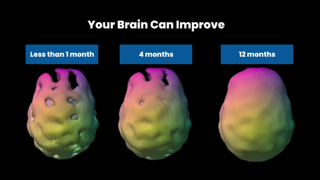
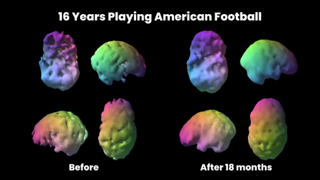
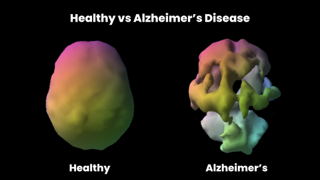
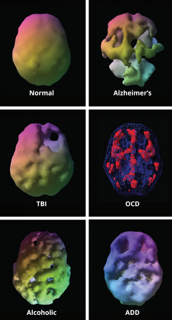
In the images below, “Brain SPECT imaging gives us a window into brain function by showing patterns of blood flow and activity. These patterns that can help us better understand changes in focus, mood, memory, stress, decision-making and behaviour.”
The takeaway
If you want clearer thinking, a brighter mood, better resilience, and a serious preventative approach to cognitive decline, start with the brain. Not with what’s trending online, but with measurement, personalised insight, and an integrative plan that builds Brain Reserve so you can think, feel, and perform at your best for decades to come.
If you’ve been doing “all the right things” but still feel foggy, flat, anxious, or stuck, it may not be a lack of effort. It may simply be the wrong strategy for your brain. And that’s exactly what makes getting an assessment the best place to start.
An Assessment is designed to give you that clarity. It looks at your brain systems profile, the primary risk factors that may be driving strain and then translates those insights into a highly personalised plan to support a healthier, better-performing brain.
Here’s to you and your brilliant brain!
References
- Amen, D.G. & Easton, M. (2021). A New Way Forward: How Brain SPECT Imaging Can Improve Outcomes and Transform Mental Health Care Into Brain Health Care. Frontiers in Psychiatry, 12, 715315.
- Lakhan, S.E. (2026). The Brain Is the Rate-Limiting Organ of Longevity: A Brain-First Systems Framework for Aging. Cureus, 18(1), e101106.
- García-García, I., et al. (2023). Maintaining brain health across the lifespan. Neuroscience and Biobehavioral Reviews, 153, 105365.
- Andrews, S.R. & Harch, P.G. (2024). Systematic review and dosage analysis: hyperbaric oxygen therapy efficacy in the treatment of posttraumatic stress disorder. Frontiers in Neurology, 15, 1360311.
- Shahid, S., et al. (2025). Hyperbaric oxygen therapy (HBOT) for neurocognitive deficits following traumatic brain injury: a systematic review and meta-analysis. Annals of Medicine and Surgery (London).
- Cassano, P., et al. (2018). Transcranial Photobiomodulation for the Treatment of Major Depressive Disorder: The ELATED-2 Pilot Trial. Photomedicine and Laser Surgery, 36(12), 634–646.
- Metcalf, C.A., Duffy, K.A., Page, C.E., & Novick, A.M. (2023). Cognitive Problems in Perimenopause: A Review of Recent Evidence. Current Psychiatry Reports, 25(10), 501–511.
- Lin, G., Zhao, L., Lin, J., Li, X., & Xu, L. (2024). Clinical evidence of hyperbaric oxygen therapy for Alzheimer’s disease: a systematic review and meta-analysis of randomised controlled trials. Frontiers in Aging Neuroscience, 16, 1360148.
About the author
Matthew Furlonger is an Amen-trained Licensed Brain Health Clinician and Performance Coach specialising in evidence-informed brain optimisation, resilience, and mental wellbeing. At NeuroVita, he translates emerging brain-health science into practical, assessment-led strategies to support clearer thinking, steadier mood, and stronger cognitive performance.
Qualifications & Training
- Licensed Brain Health Clinician – trained in the Amen Clinics Method by Dr Daniel Amen
- Certified Mental Health Integrative Medicine Provider (CMHIMP) – Leslie Korn Institute of Integrative Medicine
- Currently enrolled: Integrative & Functional Psychiatry Fellowship – year-long intensive with Dr James Greenblatt
- Foundations of Positive Psychology Specialisation – University of Pennsylvania
- DNA Analysis Practitioner – DNAlysis
Professional Membership
- International Practitioners of Holistic Medicine (IPHM) – Membership No: IPHMNM18682