
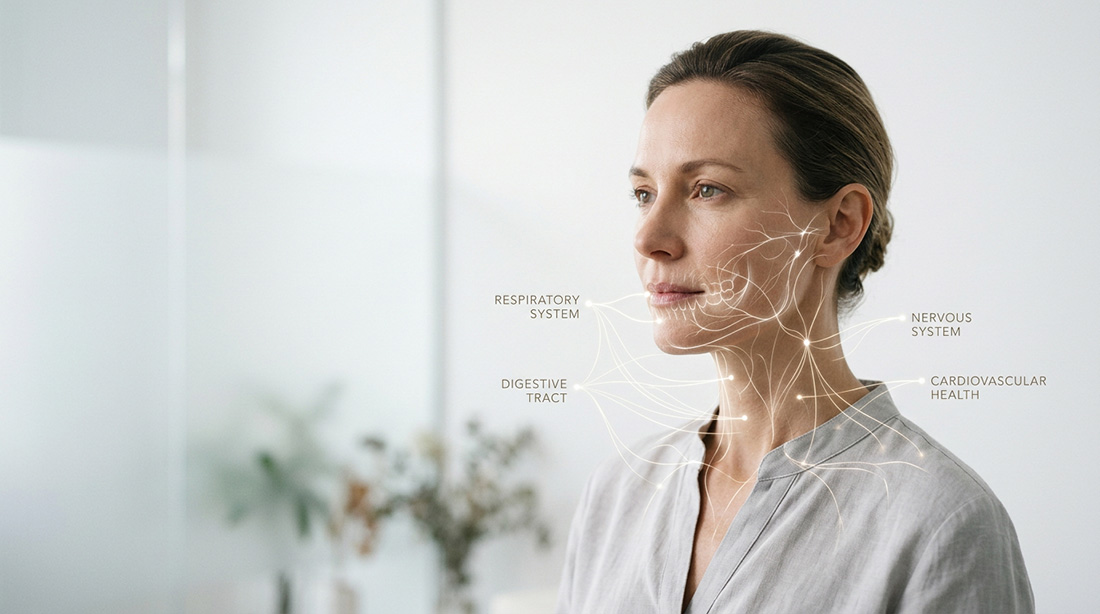
Oral health has long been viewed as the responsibility of the dentist alone. Yet growing research and clinical insight are revealing something far more significant: the mouth offers a powerful window into the health of the entire body. From cardiovascular function to inflammation and longevity, the state of our teeth and gums may tell a deeper story about well-being than previously understood.
In this article, Dr Cathy Davies reflects on the growing recognition that oral health and systemic health are deeply connected. Following her interview in the documentary Bye Ol’ Dentistry with Biohack® Yourself Media, she adds insight to how biological dentistry, preventive care, and collaboration between doctors and dentists may reshape how we think about long-term health.
Dr Cathy Davies explains that, historically, medical and dental professions have operated in silos. There is now a growing recognition of the significant connection between the oral cavity and overall health, including how hormonal and systemic health influence the mouth. In her segment on the Bye Ol’ Dentistry documentary, she shared practical observations and tips that highlight this increasingly interconnected approach to patient care.

The Traditional Divide Between Medicine and Dentistry
As medical students, we are taught to recognise head and neck cancers, to memorise cranial nerves, and to understand the complex anatomy of the face and jaw. Yet, despite this training, oral health has long felt like someone else’s territory, quietly and comfortably assigned to dentists. The mouth, we assumed, was their domain.
With growing research and clinical exposure, that assumption no longer holds.
Oral health is not an isolated speciality but a vital window into overall health and well-being. The condition of the teeth and gums reflects far more than hygiene alone; it is closely intertwined with systemic inflammation, metabolic disorders, hormonal balance, and chronic disease. Likewise, disturbances in metabolic and hormonal health can profoundly affect dentition, bone integrity, and periodontal status.
This evolving understanding highlights a crucial truth: medicine and dentistry cannot exist in silos. Optimal patient care demands collaboration, doctors and dentists working hand in hand to recognise early signs of disease, prevent long-term complications, and address the body as an interconnected whole.
Oral Health in the Biohacking and Longevity Movement
This shift in perspective is increasingly echoed beyond academic medicine.
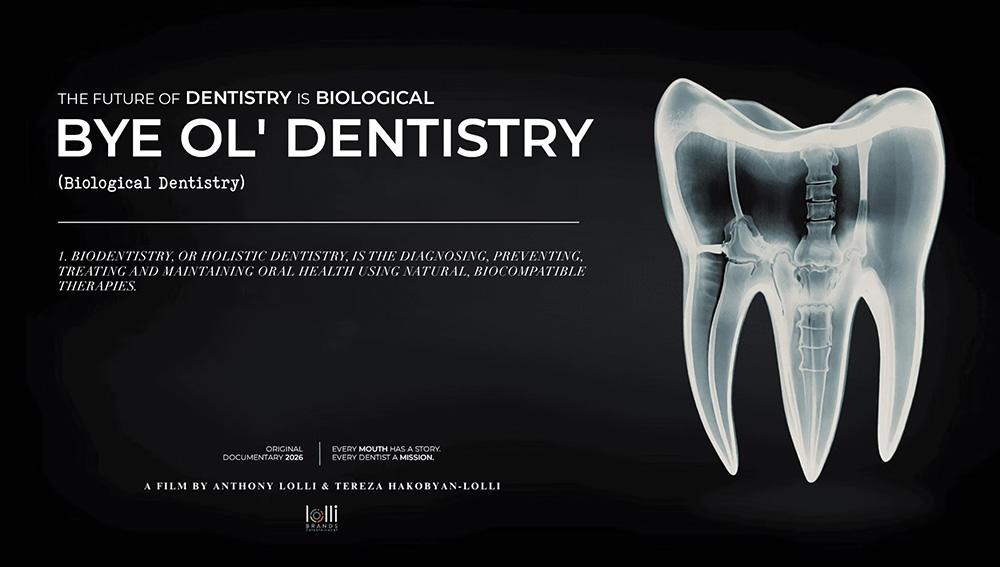
In a recent collaboration with Bye Ol’ Dentistry, produced by Biohack Yourself Media, a full-length documentary was dedicated to rethinking oral health, saying goodbye to outdated and poor dental habits, and embracing dentistry as a cornerstone of overall wellbeing and longevity.
By framing oral health as a long-term investment rather than a reactive service, the documentary reinforces a powerful message: the mouth is not separate from the body, and caring for it is fundamental to living healthier, longer lives.
Building on this movement, I had the privilege of meeting and being interviewed by the power couple and founders of Biohack Yourself Media, Tereza and Anthony Lolli, while in Miami last year. United by a mission to empower individuals to biohack their own health, they are redefining what it means to take ownership of wellbeing.
Our discussion centred on a simple but often overlooked truth: the state of your oral health has a profound impact on how you feel, function, and age.
The Oral Microbiome and Nitric Oxide
Emerging research continues to strengthen this connection.
The oral cavity plays a key role in nitric oxide production, a molecule essential for vascular health and blood pressure regulation.
Disrupting the oral microbiome, particularly through excessive use of antibacterial mouthwashes, has been shown to impair nitric oxide availability, with potential consequences for cardiovascular and metabolic health.
Oral Health and Brain Health
Beyond the cardiovascular system, poor oral health has also been linked to neurodegenerative disease.
Oral pathogens, including those associated with chronic periodontal disease, have been identified in the brains of patients with Alzheimer’s disease, suggesting that long-standing gum infections may contribute to systemic inflammation and cognitive decline.
Periodontal Disease and Systemic Inflammation
Gum disease itself is now recognised as a chronic inflammatory condition with far-reaching effects. Periodontal inflammation has been associated with insulin resistance, cardiovascular disease, and accelerated biological ageing, reinforcing the idea that persistent inflammation in the mouth does not stay confined there.

What Teeth Can Tell Us About Longevity
Perhaps most strikingly, large population studies have demonstrated that oral health can predict longevity. In one published paper, researchers reported that “the total number of sound and filled teeth predicted all-cause mortality more accurately than the number of sound teeth alone, or the number of sound, filled, and decayed teeth combined.”
All-cause mortality refers to the likelihood of dying earlier than expected from any cause, and these findings further support the growing consensus that oral health is a powerful marker and mediator of overall health.
A New Perspective on Dentistry
Taken together, these insights challenge us to rethink dentistry not as an isolated speciality, but as a foundational pillar of preventive medicine, wellbeing, and long-term health.
About the author

Medical Practitioner, Johannesburg MBBCh (Wits 1998) MBA (Henley 2007), MSc LonegvitySci
Dr Cathy is a General Practitioner with a special interest in hair transplantation and aesthetic medicine. She is a lead educator for PRF Edu, Venice Florida. Dr Cathy is renowned for her TV show "Outpatients" which aired from 2018 to 2020, helping victims of violent injuries, burn victims and those seeking life changing hair restoration. She is also a published author.