
*Sponsored post: BTL Aesthetics South Africa*
A growing number of patients are moving away from overfilled, overly treated appearances and towards more natural, structurally supported results. In this article, Dr Lev Naidoo explores how a non-invasive treatment approach can strengthen facial muscles while improving skin quality. By combining muscle stimulation with collagen support, Emface offers a more balanced and preventative way to approach facial ageing.
Why is everyone talking about Emface?
What are the top aesthetic goals patients are asking for in 2026? Increasingly, the answer is a natural, lifted, and refreshed appearance, without looking overfilled or artificial.
Patients are more cautious than ever. They want to preserve their individuality, avoid downtime, and steer clear of treatments that leave visible signs of intervention.
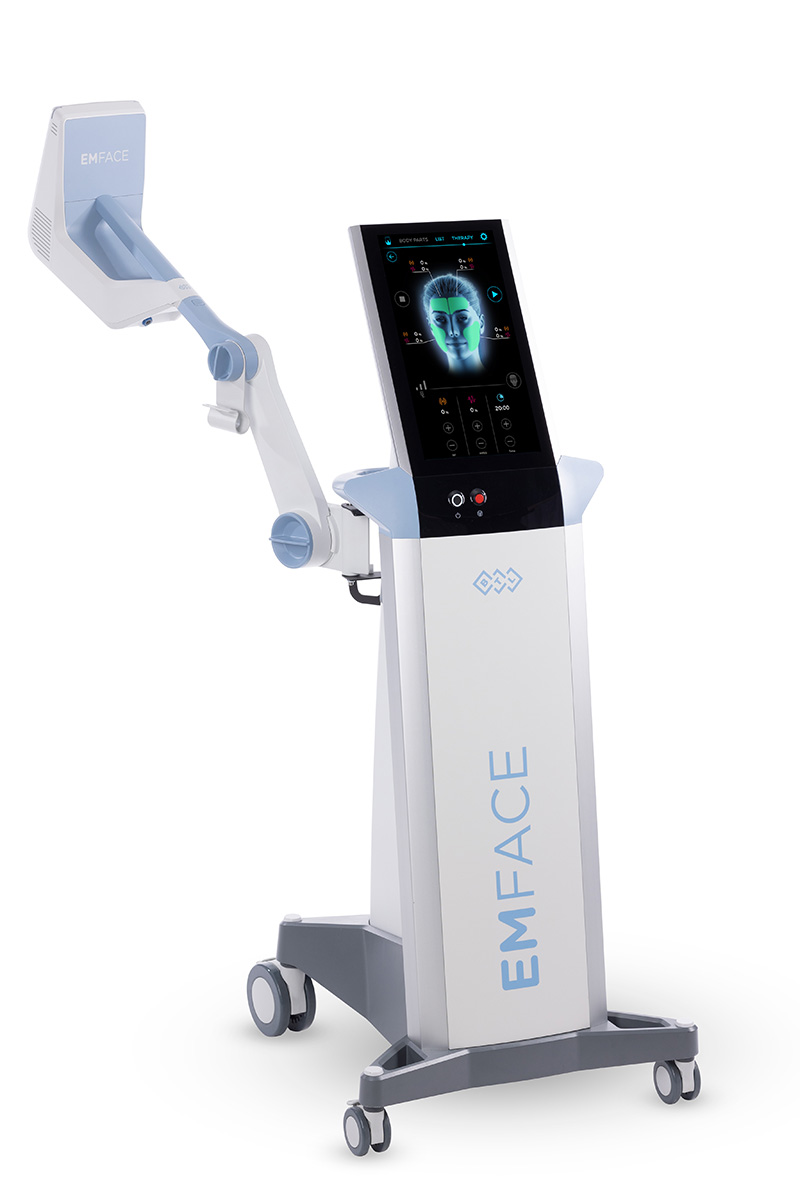
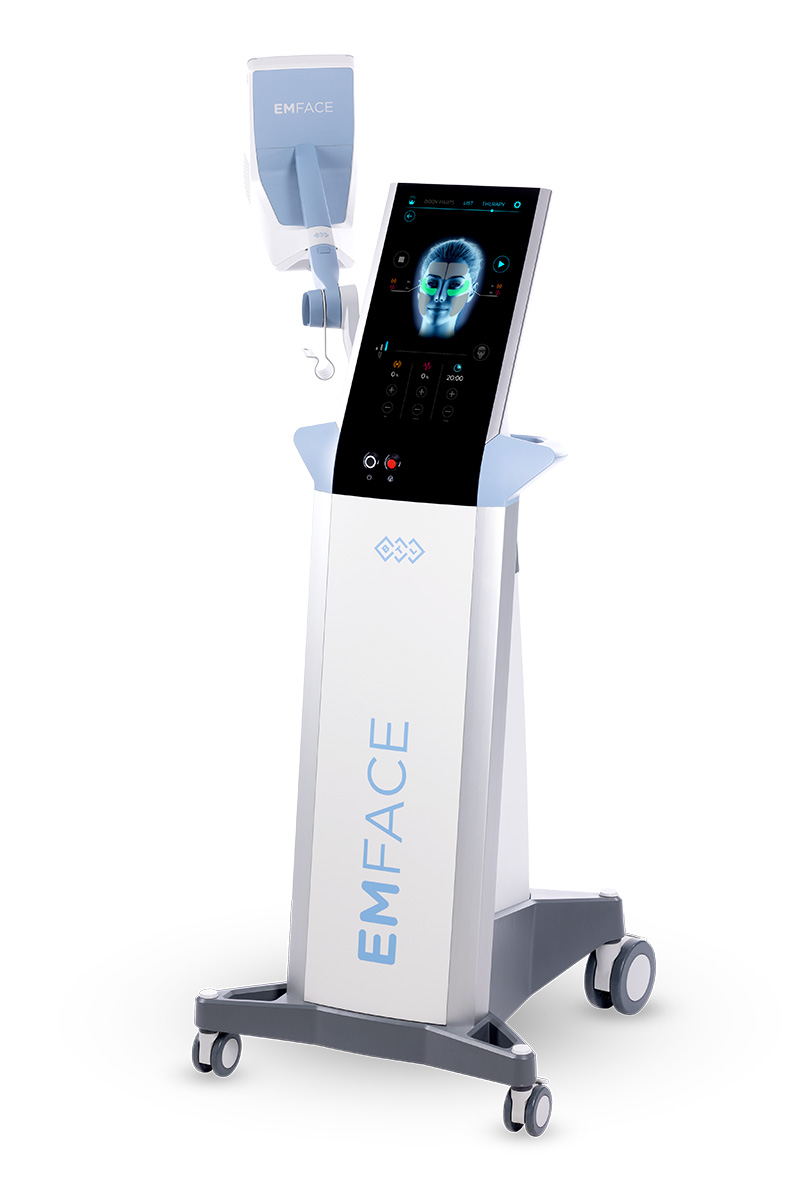
This is where Emface has gained attention. It has rapidly become one of the fastest-growing non-invasive facial treatments globally, with over one million treatments performed in under two years.
What makes it different is its dual approach. It not only targets the skin, but also the underlying facial muscles responsible for lift and support. By improving both structure and skin quality, it addresses concerns such as:
- Forehead heaviness and hooding
- Under-eye bags and laxity
- Loss of cheek support
- Nasolabial folds and jowls
- Double chin appearance
How does Emface work?
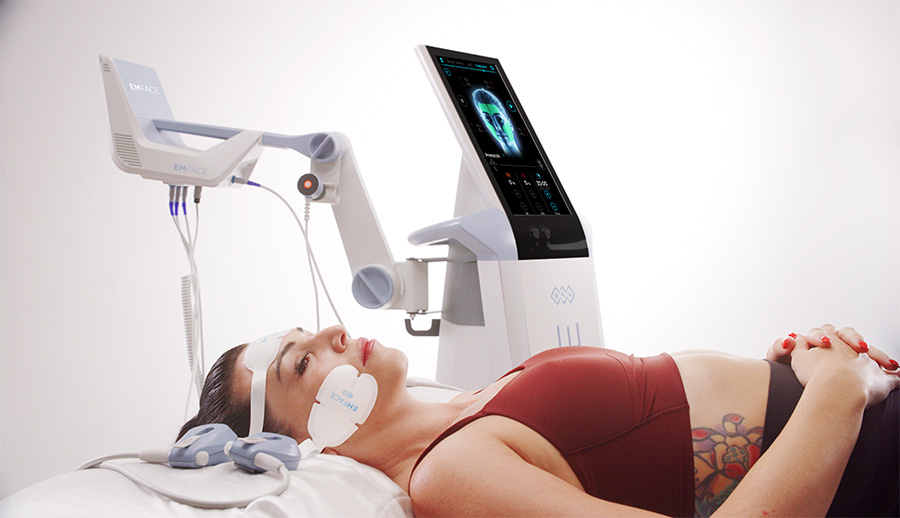
A simple way to understand Emface is to think of it as a gym session for the face.
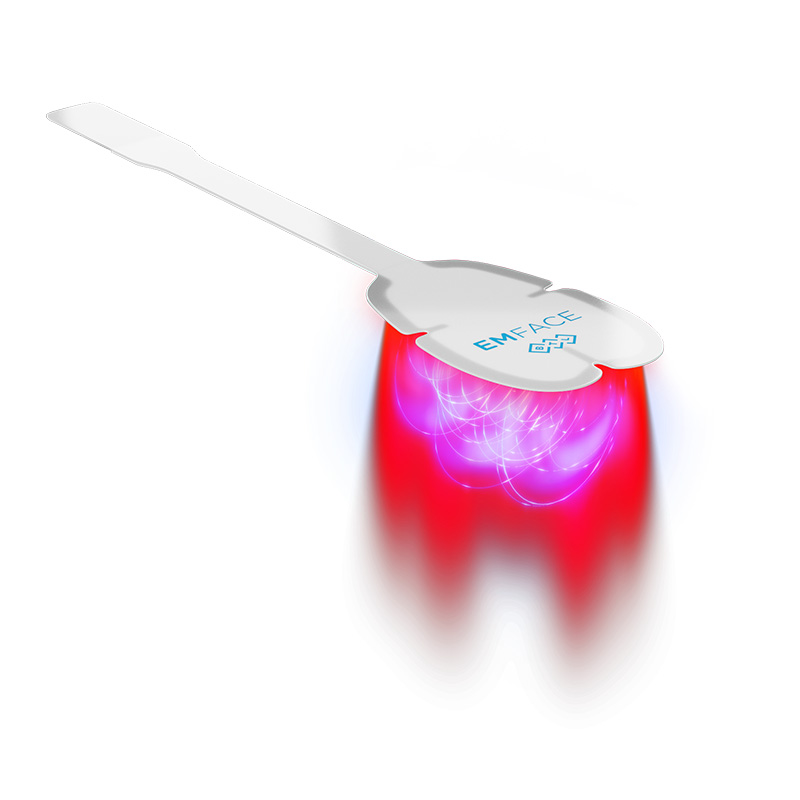
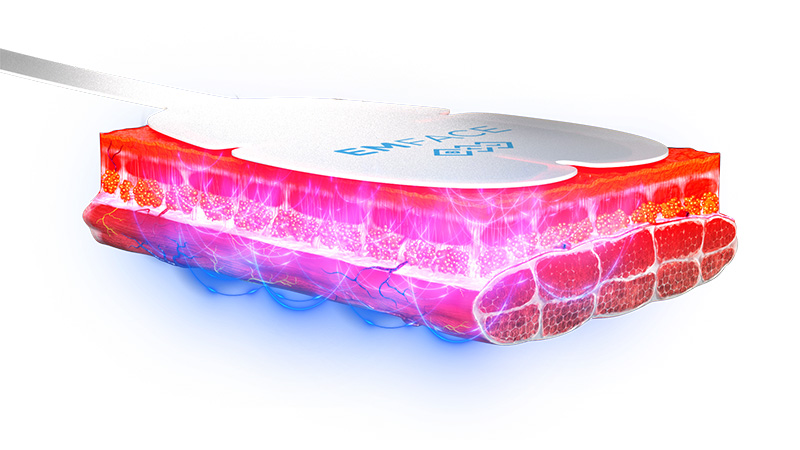
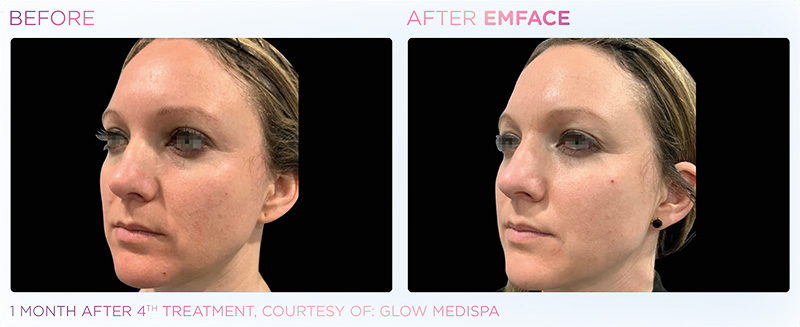
It uses HIFES (High Intensity Facial Electrical Stimulation) to contract and strengthen key facial muscles responsible for lifting. At the same time, it delivers radiofrequency energy, which stimulates collagen and elastin production in the skin.
This combination means:
- Muscles become stronger and more supportive
- Skin becomes firmer and more refined
- Overall, the facial structure appears lifted and more balanced
Clinical studies report:
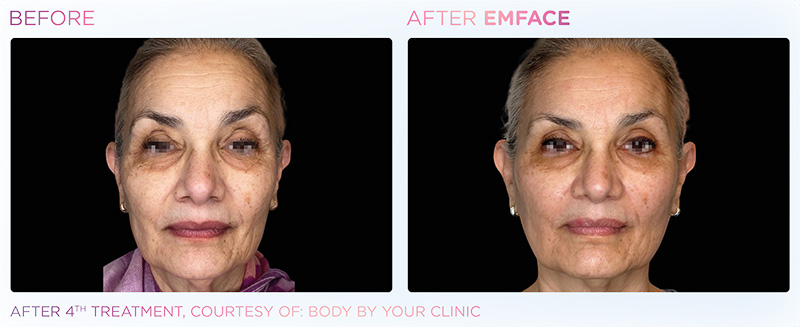
- 37% reduction in wrinkles
- 30% increase in muscle tone
- 23% lifting effect
What does the treatment feel like?
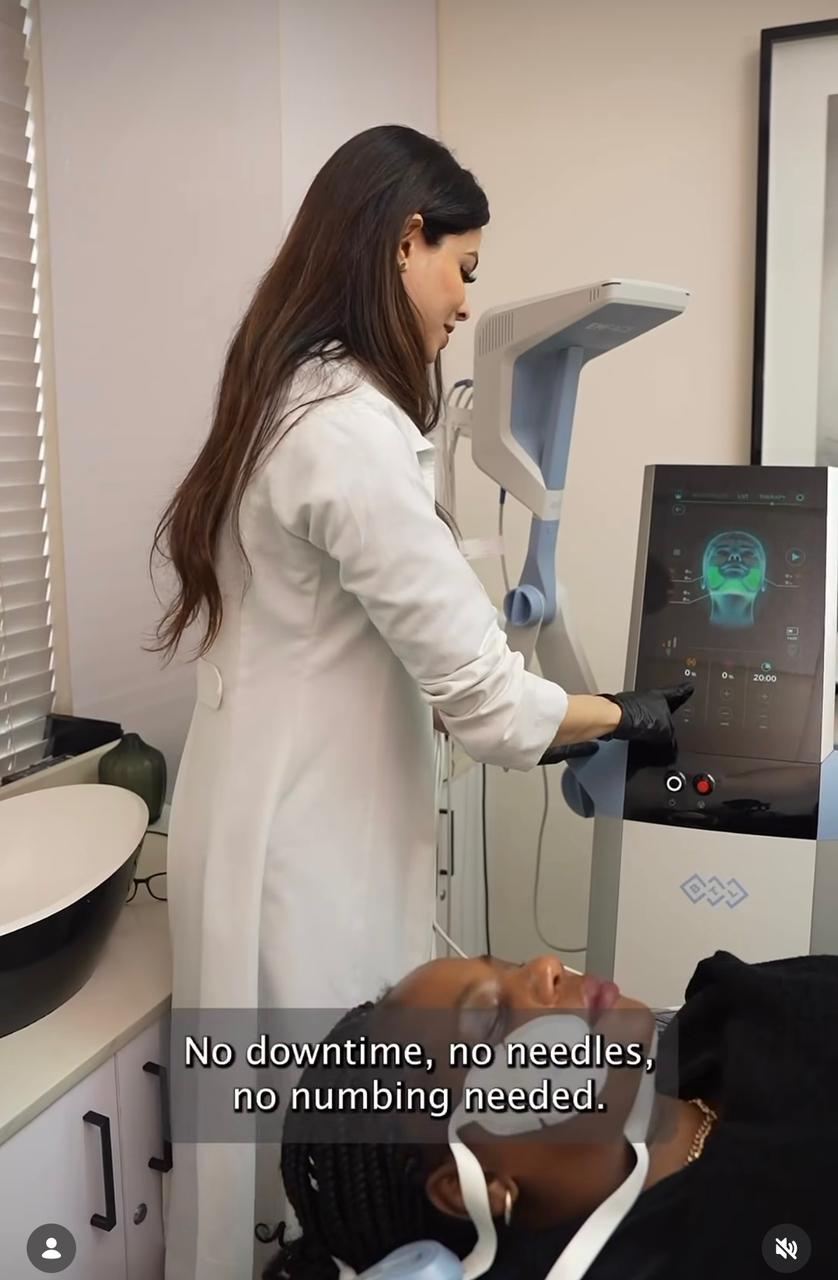
Emface treatments typically last between 20 and 40 minutes, depending on the number of areas treated.
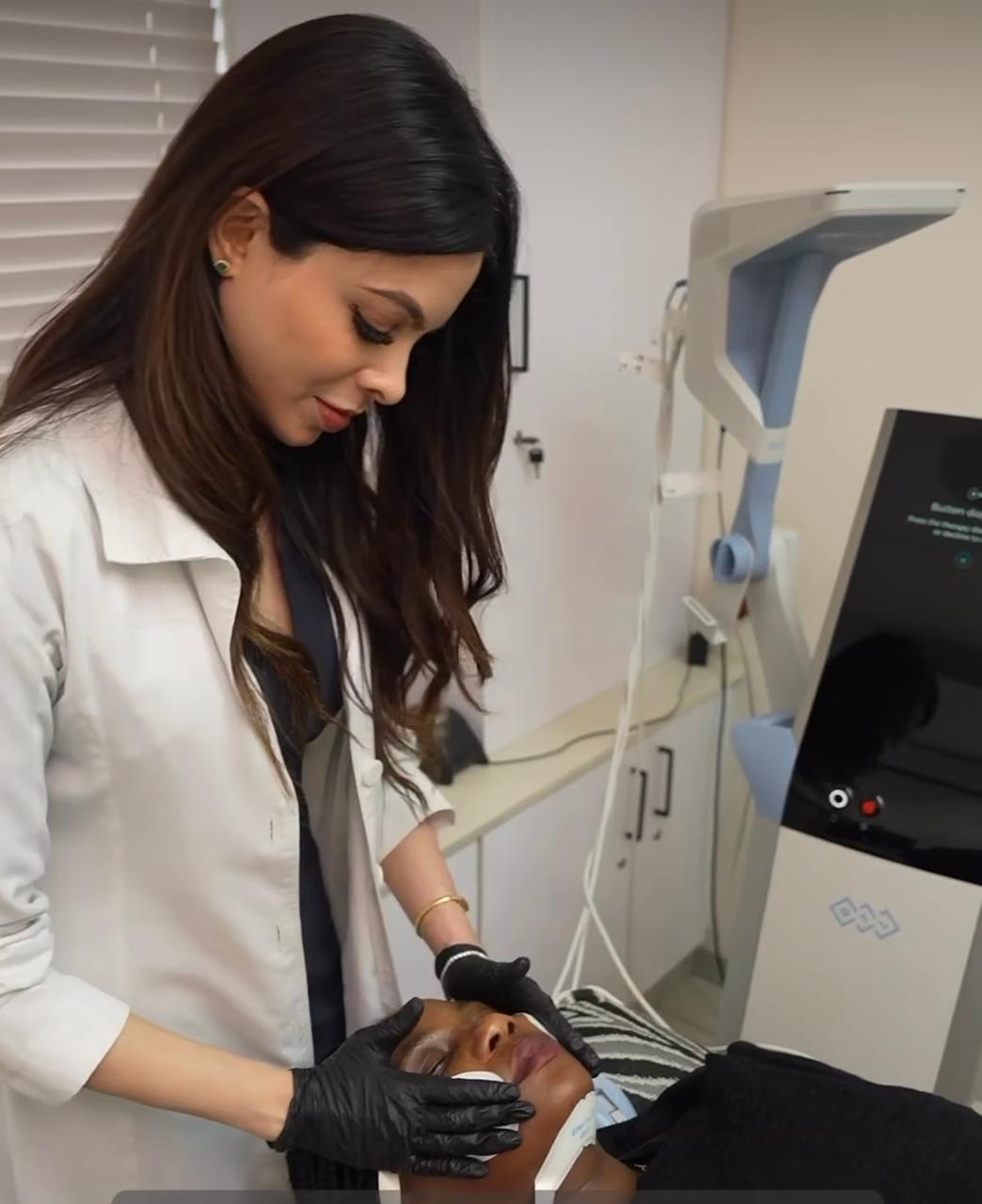
There are no needles and no need for numbing cream. Applicators are placed on the skin, and patients experience:
- A warming sensation from the radiofrequency
- Rhythmic muscle contractions from the stimulation
Importantly, there is:
- No downtime
- No damage to the skin barrier
- No peeling, swelling, or pigmentation changes
It is safe for all skin tones.
A typical protocol involves four sessions spaced one week apart, followed by maintenance treatments every three to six months.
Emface or a surgical facelift?
This depends entirely on the individual patient.
For those seeking a preventative, natural approach, Emface fits well into a long-term strategy focused on maintaining skin quality and muscle support.
Rather than offering a quick fix, it supports:
- Collagen and elastin preservation
- Muscle strength and lifting capacity
- Gradual, progressive improvement
It is particularly suited to patients who prioritise consistency and long-term skin health over immediate, dramatic change.
Does Emface replace filler?
Not necessarily.
Treatment plans should always be individualised. Some patients choose to rely solely on Emface for lifting and support, particularly if they prefer a more natural approach.
Others use Emface as a foundation and combine it with smaller, more conservative amounts of filler to achieve balance.
This approach can reduce the risk of an overfilled appearance and supports more natural facial proportions.
Does it replace botulinum toxin?
Emface and botulinum toxin work differently and can complement each other.
- Botulinum toxin softens lines caused by movement
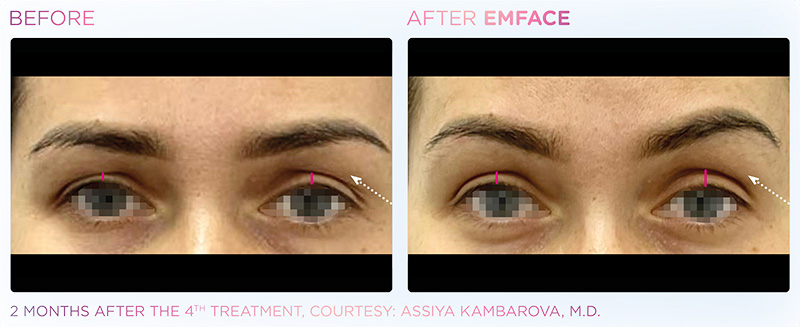
- Emface improves muscle tone at rest and supports lifting
When combined, they can enhance:
- Brow position
- Forehead balance
- Under-eye appearance
This combination is often particularly beneficial in more mature patients.
What about patients using GLP-1 medications?
Rapid weight loss, including that associated with GLP-1 agonists, can affect the face in multiple ways.
In addition to fat loss, there is often:
- Muscle weakening
- Reduced facial support
- A more hollow or fatigued appearance
While injectables can restore volume, rebuilding muscle strength is equally important.
Emface offers a way to restore:
- Muscle tone
- Structural support
- A healthier overall facial appearance
Can it help with under-eye concerns?
The under-eye area is one of the most difficult areas to treat.
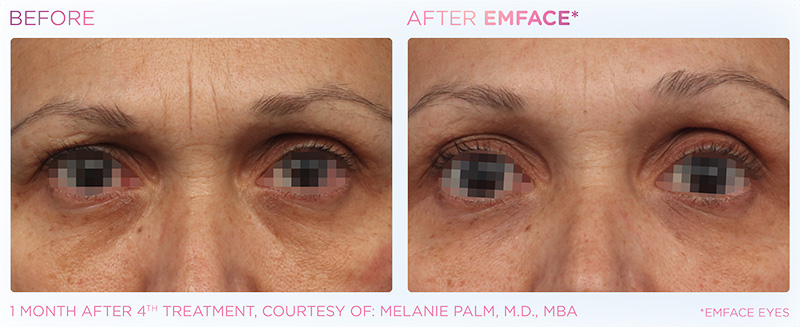
Emface addresses this by:
- Strengthening the underlying muscles
- Improving skin quality through collagen stimulation
This can help reduce:
- Puffiness
- Dark circles
- Fine lines
The result is a brighter, more rested appearance.
Are there medical applications?
Beyond aesthetics, Emface has shown potential in certain medical settings.
It has been used to support:
- Facial muscle imbalance following Bell’s palsy
- Weakness after facial trauma
- Relief in temporomandibular joint (TMJ) dysfunction
These applications continue to be explored.
A growing shift in aesthetic medicine
As patient preferences evolve, there is a clear move towards treatments that support natural structure rather than replace it.
Emface fits into this shift by offering:
- A non-invasive approach
- No downtime
- A focus on muscle health and skin quality
For patients seeking a more balanced, gradual approach to facial ageing, it presents an alternative worth considering.
Contact The Dermatology Room:
- Website: www.thedermatologyroom.com
- Phone: +27 10 900 1277
- Email: info@thedermatologyroom.com
- Follow The Dermatology Room on Instagram and Facebook.
Contact BTL Aesthetics South Africa:
- Website: www.btlaesthetics.com
- Phone: +27 76 232 8058
- Email: btl-sa@btlnet.com
- Follow BTL Aesthetics on Instagram (medical), Instagram (aesthetics) and Facebook.
About the author

MBChB (cum laude), FCDerm (SA) (with distinction), MMed (Derm)
Dr Lev is a specialist dermatologist specialising in great skin • Obtained the Fellowship of the College of Dermatology • Awarded the Peter Gordon Smith medal for academic excellence • Awarded a scholarship from the African Association for Research and Training in Cancer • Founder of The Dermatology Room www.thedermatologyroom.com
- Executive committee member of AAMSSA (The Aesthetic and Anti-ageing Society of South Africa) and SASDS (South African Society For Dermatologic Surgery)
- Member of DSSA (Dermatology Society of South Africa, VSSA (Vitiligo Society of South Africa), EADV (European Academy of Dermatology and Venereology) and ASLMS ( American Society for Laser Medicine and Surgery).
- Co-founder of iClass Anatomy Africa