
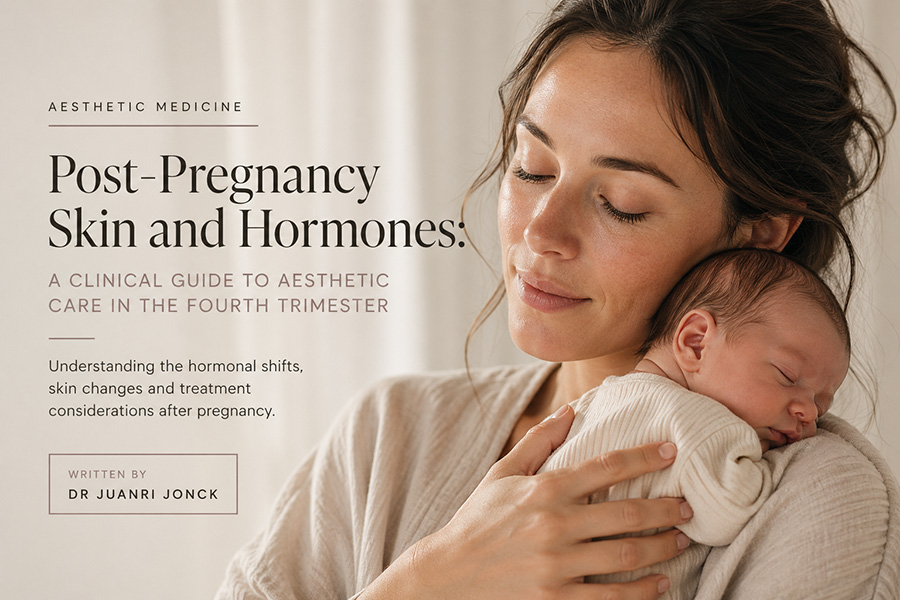
The post-pregnancy period, often called the “fourth trimester”, brings rapid changes that many women don’t fully expect. After delivery, hormone levels shift quickly, affecting everything from the skin and hair to energy, mood and overall wellbeing. In this article, Dr Juanri Jonck explains these changes in a clear and practical way, helping both patients and practitioners understand what is happening and how to approach treatment with the right timing and care.

The Endocrine Shift After Delivery
The post-pregnancy period is one of the most physiologically dynamic (how the body functions and adapts) transitions in a woman’s life. For us as aesthetic practitioners, it is important to understand that the postpartum patient is not simply dealing with tired skin or a few new cosmetic concerns. She is, in fact, moving through a major endocrine (hormone system of the body), metabolic (how the body uses energy), inflammatory (immune and healing response) and emotional recalibration. When approached correctly, this period offers an opportunity not only to treat the skin, but also to support, reassure and guide the patient holistically.
Immediately after delivery, oestrogen and progesterone levels fall dramatically and acutely because the placenta, which was producing these hormones in high amounts, is no longer present. In breastfeeding women, prolactin (the hormone that stimulates milk production) remains elevated to support milk production, while ovulation and cyclical ovarian hormone production may be delayed for weeks to months. This means that ovarian oestrogen production stays relatively low. In practical terms, lactation creates a temporary hypoestrogenic state (a period of lower-than-normal oestrogen levels).
For the skin, lower oestrogen generally means less of the support that oestrogen normally gives to hydration, barrier function (the skin’s ability to protect and retain moisture), dermal collagen signalling (communication that supports skin structure) and wound repair. Clinically, this can present as drier skin, increased sensitivity, dullness, impaired barrier tolerance, and sometimes worsening of inflammatory dermatoses (skin conditions such as eczema or acne) in susceptible patients. The best-established postpartum hypoestrogenic symptoms are mucosal dryness and atrophy (thinning and dryness of tissues), but this same low-oestrogen physiology helps explain why some lactating women also report more reactive, less resilient skin.
In non-breastfeeding women, ovulation can return surprisingly early, sometimes within a few weeks. This hormonal shift explains why many women feel unlike themselves in the early postpartum period: the skin, hair, mood, sleep pattern, and energy can all change at once.
How Hormonal Changes Affect the Skin
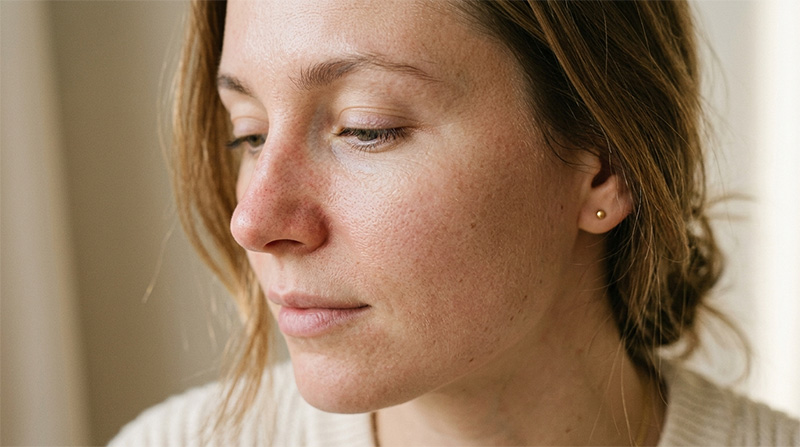
These hormonal changes have visible effects on the skin. During pregnancy, high oestrogen often improves barrier hydration and can suppress the usual degree of hair shedding. After birth, that support is withdrawn. Patients may present with dryness, dehydration, increased sensitivity, dullness, eczema flares, acne breakouts and worsening pigmentation such as melasma (hormone-related pigmentation).
Hair Changes and Telogen Effluvium
Postpartum telogen effluvium (temporary hair shedding due to a shift in the hair growth cycle) is also very common: many women notice significant shedding from around two to four months after delivery, as hairs that were held in the anagen phase (active growth phase of hair) during pregnancy shift into shedding. This is usually temporary but can be distressing and should be explained clearly.
Reassurance and Clinical Awareness
The first step in caring for the postpartum aesthetic patient is reassurance. Many of these changes are physiological (normal body processes), not pathological (disease-related). Patients are often frightened that they have suddenly “aged”, that their acne has returned permanently, or that their hair loss means something is seriously wrong. Language matters here. It helps to explain that postpartum skin often reflects hormonal withdrawal, sleep deprivation, oxidative stress (cell damage caused by stress and environmental factors), barrier disruption and nutrient depletion rather than irreversible damage.
At the same time, one must stay clinically alert, because not every postpartum complaint is merely cosmetic. Significant fatigue, low mood, palpitations, heat intolerance, weight changes, severe shedding or persistent skin deterioration may indicate anaemia (low iron or red blood cells), thyroid dysfunction (thyroid hormone imbalance), nutritional depletion or postpartum mood disorders rather than a purely aesthetic issue.
Early Postpartum Treatment Approach
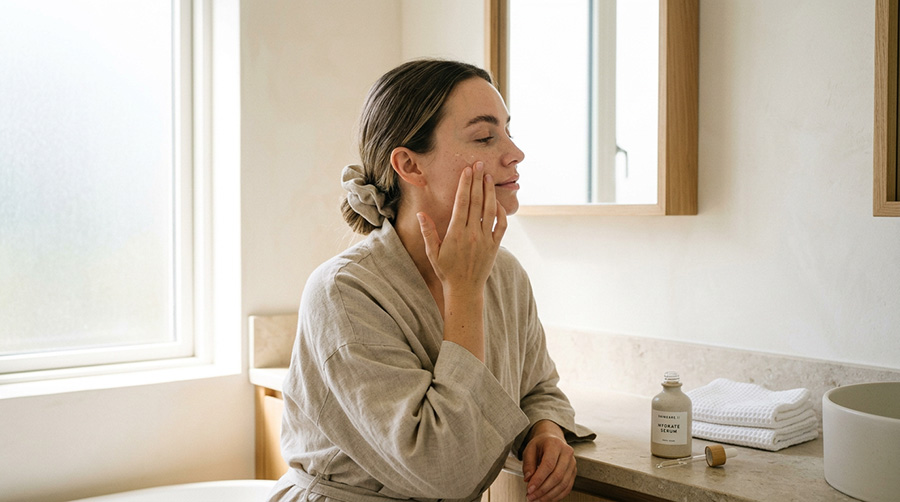
In the early postpartum phase, treatment should be conservative and barrier-focused. For most women, the first 6 weeks are best approached with repair rather than aggressive intervention. Here we use gentle cleansing, non-irritating serums and barrier-supportive products, mineral SPF, pigment prevention, and targeted home care that is compatible with lactation where relevant.
Ingredients such as azelaic acid and benzoyl peroxide are generally considered low risk in breastfeeding when used appropriately, while chronic hydroquinone use is often approached more cautiously because of limited lactation data and higher systemic absorption (how much enters the bloodstream) compared with many other topicals.
Introducing Aesthetic Treatments Safely
Once the patient is medically stable and healing well, usually after the early postpartum recovery window, selected aesthetic treatments may be introduced according to symptom burden, breastfeeding status and overall recovery. Appropriate options often include hydrating facials, barrier-supportive skincare, superficial peels such as glycolic or lactic acid, and, in selected cases, gentle microneedling or laser-based treatments.
Botulinum toxin during lactation appears to carry very low theoretical risk, and recent LactMed data found either no detectable toxin in milk or only minute amounts after normal facial dosing, but evidence is still limited, so this remains an individualised risk-benefit discussion rather than a general recommendation. Dermal fillers are usually approached more cautiously in breastfeeding because robust safety data are lacking. Body contouring and surgical procedures should generally wait until tissues, weight and hormonal patterns have stabilised fully.
When to Investigate Further
From a testing perspective, investigations should be symptom-led rather than routine for every patient. Useful tests in the correct clinical context include a full blood count for postpartum anaemia, thyroid function tests (to assess thyroid hormone levels) if there is fatigue, mood change, palpitations or persistent shedding, vitamin D, folate and B12 where deficiency is suspected, and iron studies if hair loss or fatigue are prominent.
Folate deficiencies are still seen in patients who have an underlying methylation abnormality (difficulty processing certain vitamins), even though they were actively taking folic acid, in which case they should switch to a methylated folate (a more easily absorbed form). It is worth noting that ferritin (stored iron levels) can be falsely elevated in the first six weeks postpartum because of the inflammatory milieu (healing environment) after delivery, so interpretation during that period requires caution. In selected patients with persistent acne, irregular cycles after the expected recovery period, or signs of hyperandrogenism (excess male-type hormones), broader hormonal work-up may later be appropriate.
A Holistic Approach to Postpartum Recovery
Ultimately, the postpartum patient needs more than a treatment plan. She needs context. She needs to know that her skin may be reactive, her pigment may flare, her hair may shed, and her confidence may dip, but that this does not mean she is failing or permanently deteriorating.
Good postpartum aesthetic care is rooted in timing, emotional support, gentleness and clinical judgement. When we understand the endocrine reality of the fourth trimester, we are better able to support women not only back to skin health, but back to a stronger sense of themselves.
References
- Dukic J, et al. Estradiol and progesterone from pregnancy to postpartum. 2024.
- McNeilly AS. Lactation and the physiology of prolactin secretion.
- Perelmuter S, et al. Genitourinary syndrome of lactation: a new perspective on postpartum and lactation-related hypoestrogenism. 2024.
- Lyons CE, Murase JE. Managing Skin Diseases that Flare During Pregnancy and the Postpartum Period. 2024.
- Zhao L, et al. Prevention of Melasma During Pregnancy: Risk Factors and Preventive Strategies. 2024.
- Malkud S. Telogen Effluvium: A Review. 2015.
- Galal SA, et al. Postpartum Telogen Effluvium Unmasking Additional Latent Hair Loss Disorders. 2024.
- Neef V, et al. Current concepts in postpartum anemia management. 2024.
- Rad SN, et al. Postpartum Thyroiditis. StatPearls. 2023.
- LactMed. Azelaic Acid.
- LactMed. Hydroquinone.
- LactMed. Botulinum Toxins, Therapeutic.
- Trivedi MK, et al. A review of the safety of cosmetic procedures during pregnancy and lactation. 2017.
About the author

MBChB (Pret)
Dr Juanri Jonck is a medical doctor based at lifeLAB in Pretoria and serves as a medical advisor for BST Global Aesthetic Connection. She is dedicated to enhancing natural beauty and restoring confidence through a holistic, individualised approach to patient care. Her primary focus lies in orthomolecular medicine and the importance of health optimisation through nutraceuticals, not only to prevent but also to treat certain pathological processes. She has a special interest in Aesthetic Medicine, Hormone Optimisation, IV Nutrient Therapy, and Lifestyle Improvement. Dr Jonck believes that anti-ageing begins from within, and that a natural, refreshed appearance is best achieved through internal balance. By evaluating and optimising hormone and nutrient levels, she helps patients function at their optimum health level and achieve sustainable, long-term wellbeing.