
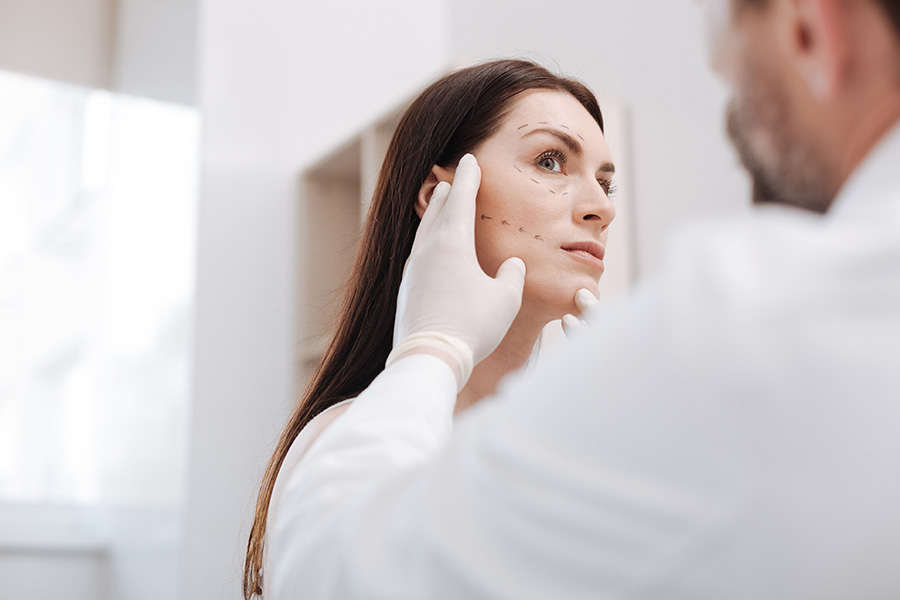
Sometimes the most valuable outcome of a plastic surgery consultation is the decision to wait. Plastic surgeon Dr Dèhan Strüwig reflects on how timing, realistic expectations and careful judgement shape the advice a patient receives. Continuing his theme of “Stillness, Skill, and the Long View”, he explains why choosing a smaller procedure, considering another treatment or putting the instruments down can be an important part of patient care.
It’s understandable to assume that when you consult a plastic surgeon, the answer will eventually involve surgery.
Sometimes it does.
Sometimes the most useful words a plastic surgeon can say are: “Not yet.”
And occasionally they are: “I don’t think an operation will help you.”
This may sound strange coming from someone whose profession is surgery. We spend years learning how to operate. But experience also teaches us when not to.
A carpenter does not reach for a saw simply because he owns one. A good mechanic does not replace an engine when the problem is a loose connection. Having a skill does not mean you should always use it.
Knowing when to intervene—and when to leave well enough alone—is an important part of plastic surgery.
The Consultation Is Part of the Treatment
An operation begins with a question, not an incision.
What are we trying to achieve?
Sometimes the answer is clear. A skin cancer needs removal. A wound needs reconstruction. An eyelid may interfere with vision. A breast may need reconstruction following cancer surgery.
At times, the decision is not straightforward.
Would surgery improve function? Is the expected improvement worth the risk? Is the patient healthy enough for the procedure? Are expectations realistic? Is there a simpler treatment that should be tried first?
Even cosmetic surgery requires these questions.
Wanting something changed does not automatically mean that surgery is the best way to change it.
The consultation therefore has value even when it does not lead to an operation.
Sometimes clarity is the treatment.
There Is a Right Operation—and a Right Time
Timing matters enormously in plastic surgery.
We have spoken throughout this year about tissue, healing and reconstruction. Those same principles influence when an operation should happen.
A wound may need time for swelling to settle. A scar that appears red and firm at three months may look quite different at twelve months. Tissue damaged by trauma may need time to declare what is healthy and what is not.
Sometimes another medical condition should be treated first.
And sometimes a patient simply needs more time to think.
This can be difficult in a world accustomed to immediate solutions. We can order dinner, transfer money and speak to somebody on another continent within seconds. Biology remains stubbornly unimpressed by our efficiency.
The body keeps its own timetable.
Waiting is therefore not always indecision.
Sometimes waiting is the decision.
Every Operation Is a Balance
No operation is entirely without risk.
Even a relatively small procedure involves balancing what we hope to gain with what we ask the body to undergo to achieve it.
There may be anaesthetic risks. Bleeding, infection, delayed healing, or an unexpected scar can occur. Surgery creates swelling and inflammation before healing can begin.
This does not mean you should fear surgery.
It means surgery should have a good reason.
For reconstructive procedures, the benefit may be restoring function, closing a difficult wound or rebuilding tissue after cancer.
For cosmetic surgery, the benefit may be an improvement in shape, proportion or appearance that is meaningful to the patient.
Neither should be approached casually.
The question is not simply, “Can this operation be done?”
A better question is, “Should it be done, for this patient, at this time?”
Those are very different questions.
Sometimes Less Surgery Is Better Surgery
Plastic surgery offers an enormous range of techniques.
That does not mean the most complicated option is always the best one.
A small skin cancer defect, for example, may sometimes close directly. Another may require a skin graft. A third may need a local flap.
The cleverest reconstruction is not necessarily the most elaborate.
It is the one that solves the problem appropriately while placing the least reasonable burden on the patient.
The same principle applies elsewhere in plastic surgery.
More is not automatically better.
This is one of those wonderfully simple lessons that takes years to appreciate.
Experience tends to make us less impressed by complexity for its own sake.
When Expectations and Surgery Do Not Match
There is another reason a plastic surgeon may advise against an operation.
Surgery has limits.
It can change tissue. It cannot guarantee perfection.
It can improve a feature. It cannot make one human body behave exactly like another.
It can improve a scar. It cannot usually erase every trace that an injury or operation ever occurred.
This becomes especially important in all plastic surgery.
Photographs, filters and social media have created images of faces and bodies that may not even exist in real life. Human beings have asymmetry, variation and individual anatomy.
A responsible consultation sometimes involves explaining what surgery cannot achieve.
That conversation may be less exciting than discussing an operation, but it is just as important.
A technically successful operation performed for an unrealistic goal may still leave a patient unhappy.
The destination needs to be possible before we begin the journey.
A Second Opinion Is Not an Insult
Complex decisions sometimes deserve another opinion.
Medicine is not mathematics. Two experienced plastic surgeons may look at the same problem and suggest different reasonable approaches.
Seeking another opinion does not mean that the first plastic surgeon has failed.
Nor should a plastic surgeon be offended.
A second opinion can confirm a plan, offer another option or occasionally raise a question that deserves further thought.
Good decisions survive careful examination.
And when an operation is elective, there is rarely anything wrong with taking enough time to become comfortable with the decision.
The Patient Still Has a Role
Just as patients participate in healing, they also participate in deciding whether surgery is right for them.
Ask questions.
Understand the likely benefit.
Understand the limitations.
Know what recovery will require from you.
Consider whether this is the right time in your life for the restrictions that may follow.
And if you remain uncertain, give yourself permission to wait.
Consent is more than signing a form.
It is understanding the choice you are making.
A plastic surgeon brings knowledge and experience to that decision. The patient brings something equally important: their own life, priorities and values.
Good surgery begins when those two perspectives meet honestly.
The Wisdom of Restraint
The Stoics wrote often about the difference between what we can do and what we should do.
That distinction belongs in medicine too.
Skill is not demonstrated by action alone.
Sometimes skill is recognising that tissue needs more time. Sometimes it is choosing the smaller operation. Sometimes it is recommending another form of treatment. Sometimes it is waiting a bit longer.
And sometimes it is putting the instruments down altogether.
There is a certain confidence in restraint.
It requires us to resist the idea that doing more must mean caring more.
As this year’s theme of Stillness, Skill and the Long View continues, perhaps this month offers the simplest lesson of all.
Stillness gives us space to consider.
Skill gives us choices.
The long view helps us decide which choice is worth making.
To my patients, friends and colleagues, I wish you the confidence to ask questions, the patience to wait when waiting is wise, and the courage to act when the time is right.
In surgery, as in life, good judgment is not measured by how much we do, but by how thoughtfully we choose what is worth doing.
About the author

M.B.Ch.B; M.Med. (Plast&Reconstr) (Stell)
Dr Dèhan is a respected Plastic and Reconstructive Surgeon known for his meticulous attention to detail and unwavering commitment to patient care. With a compassionate and hands-on approach, he supports his patients throughout their surgical journey. His expertise spans both cosmetic and reconstructive surgery, with a particular focus on facial procedures, breast surgery, abdominoplasty, and liposuction.
Dr Dèhan’s experience in treating traumatic injuries, including hand injuries, burns, and lacerations, in children and adults alike. His practice also integrates skin cancer surgery, supported by a dedicated team of nurses, healthcare professionals, and a Skincare Diagnostic Technician.
He completed his medical studies at the University of Stellenbosch and Cape Town Medical School, followed by a prestigious fellowship in Paris under Dr Francoise Firmin, where he specialised in cosmetic surgery and ear reconstruction. Further training across Europe and the U.S. has enriched his practice with global insights into patient care and management.