
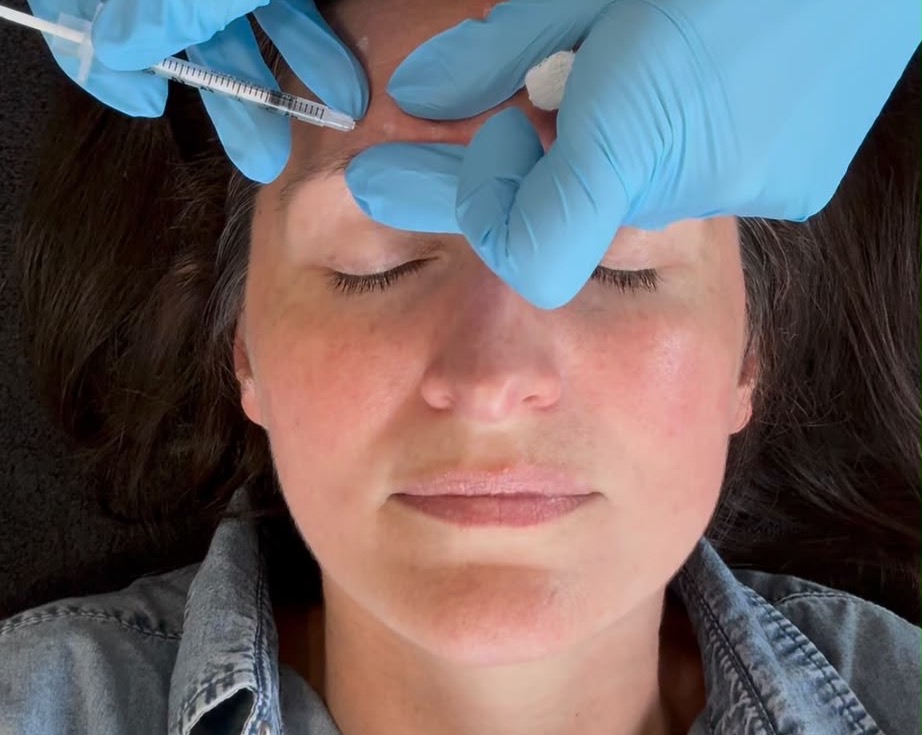
Aesthetic treatments evolve with age. Kelli Clifton shares her experience of returning to botulinum toxin treatment at 40, alongside insights from Dr Michelle Hutton of Hutton Medical in Plettenberg Bay. Together, they explore how personalised treatment, skincare and preserving natural expression can support an approach centred on ageing well.
Many women experience botulinum toxin treatment long before their 40s. It might begin with a small line between the brows, a forehead that creases when you concentrate or lines around the eyes that become more noticeable with expression. For others, treatment is primarily preventative, maintaining a softer, smoother appearance before expression lines become permanently etched into the skin.
But what changes when you reach 40?
According to Dr Michelle Hutton of Hutton Medical in Plettenberg Bay, the fundamentals of botulinum toxin remain the same, but the context in which it’s used changes considerably.
“Having botulinum toxin since the age of 25 is mainly preventative, for preventing static lines from forming in the first place,” she explains. “At 40, however, the main difference that comes into play is that we are no longer dealing with lovely, plump, youthful skin that ‘behaves’ no matter what we do to it.”
By this stage, the effects of collagen loss, accumulated sun exposure and other aspects of skin ageing become more apparent. And while botulinum toxin remains useful, it is important to understand exactly what it can (and cannot) do.
“Botulinum toxin only relaxes the underlying muscle; it does not treat the skin,” says Dr Hutton. “The main difference here is that multiple treatments come into play.”
That could mean combining botulinum toxin with other treatments such as microneedling, peels, professional skincare or other aesthetic procedures designed to address skin quality alongside muscle movement. The basics of botulinum toxin treatment stay the same, but the way the face is treated as a whole needs to evolve with the ageing process.
Prevention Still Matters
Moving from your 20s into your 30s and 40s does not mean the purpose of botulinum toxin suddenly changes. The goal remains to prevent dynamic expression lines from becoming static lines. However, Dr Hutton says an ageing face requires greater consideration of how different areas interact.
“As we age, we need to make sure that all areas of the face can handle muscle relaxation, especially the forehead muscle,” she says. “So, in summary, we have to be a bit more careful with botulinum toxin as we age, as skin laxity comes into play.”
This is where simply treating every visible line can become problematic. Aesthetic medicine is not just about eliminating individual wrinkles. It’s more about understanding facial movement, proportions and balance. “I’m always looking more broadly at facial movement and expression of individual patients,” says Dr Hutton. “Good injectables are always about achieving a good balance of movement whilst still reducing static lines.”
What Can (and Can’t) Be Treated?
There are certain changes that botulinum toxin addresses well. Dr Hutton says these include frown lines, laughter lines, forehead lines and lines around the mouth. But not every sign of ageing is a muscle-related concern. “Botulinum toxin can’t address any skin that starts to sag towards the jowl area,” she explains.
This is where a broader treatment plan is actioned, potentially including biostimulators, fillers, resurfacing treatments or tightening lasers. This is also dependent on the individual patient and their anatomy. The important distinction is that these treatments address different aspects of ageing. Botulinum toxin works at the level of muscle activity, while other aesthetic treatments may be used to address skin quality, laxity or volume changes. For Dr Hutton, that makes assessments an obvious priority.
“I don’t need to know someone’s age to decide on treatment as it’s all about a proper anatomical skin, fat, muscle and bone assessment,” she says. “Once I’ve done that, I can treat.”
Her assessment begins with skin quality, followed by muscle movement and then consideration of facial fat and bone volume loss.
Fifteen Years of Treatment: Does Long-Term Use Change Things?
For someone who has been receiving botulinum toxin treatment for approximately 15 years, the question of whether long-term use changes the approach is an obvious one. Dr Hutton says that generally, it does not dramatically alter how she approaches treatment. However, she continues to monitor the muscle itself.
“If I feel the muscle is getting ‘too thin’ or I see atrophy, then I suggest a break in botulinum toxin,” she says, adding that this is something she sees relatively rarely.
And what about the idea that muscles can become resistant after years of treatment? According to Dr Hutton, true resistance is uncommon. “In studies done on this, it’s very uncommon for people to become resistant to the effects of botulinum toxin.”
If she feels the treatment is not producing the expected results in a patient, she says other factors may be responsible. In those circumstances, she may consider changing to another brand to determine whether there is a difference in the patient’s response. Taking a break can also change the assessment when a patient returns. Rather than automatically reverting to a previous dosage, Dr Hutton reassesses the muscle movement at that particular point in time. “Someone who has taken a break might just require a higher dose at the time,” she explains.
Returning to Treatment After Pregnancy
Pregnancy and motherhood can introduce another layer of complexity to aesthetic treatment. Hormonal changes, pregnancy itself, breastfeeding and the postpartum period can all coincide with noticeable changes in the skin and face. Dr Hutton describes pregnancy as ‘a complete reset for the skin’ and says a full assessment after the postpartum period is important to determine what is best and how the skin is likely to respond. When a woman returns to aesthetic treatment after pregnancy and breastfeeding, Dr Hutton still assesses her for botulinum toxin in the same way but approaches her overall skin plan differently.
“A lot can change with our skin while pregnant and breastfeeding, so my approach becomes multifactorial,” she says. “That may involve a series of professional skin treatments and a good home-care routine before returning to botulinum toxin for the re-emergence of static lines.”
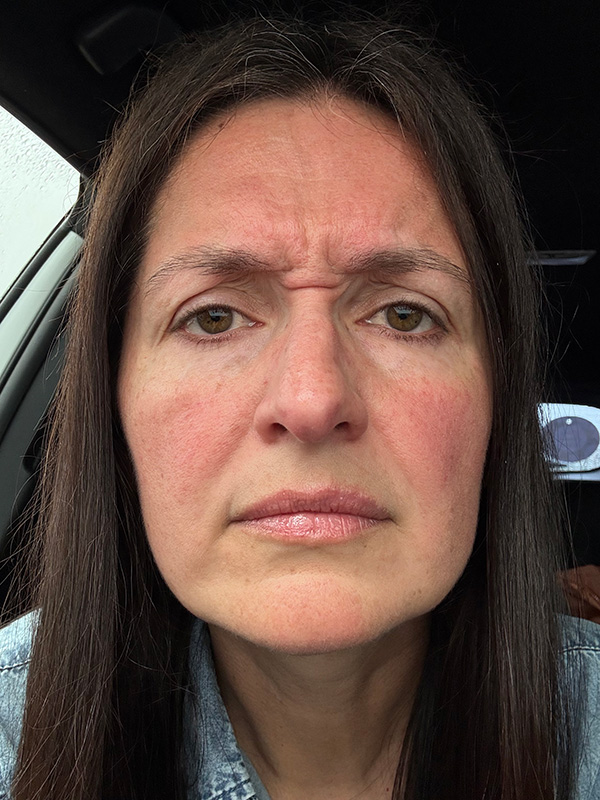
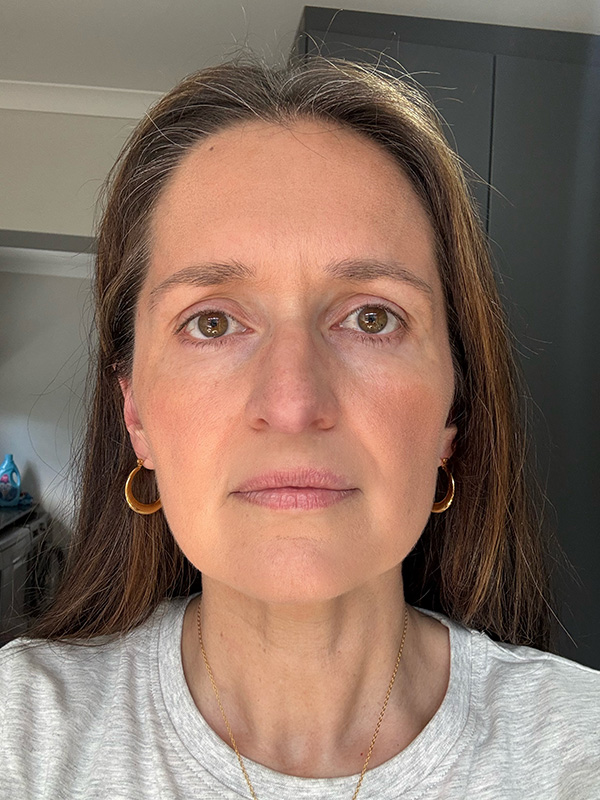
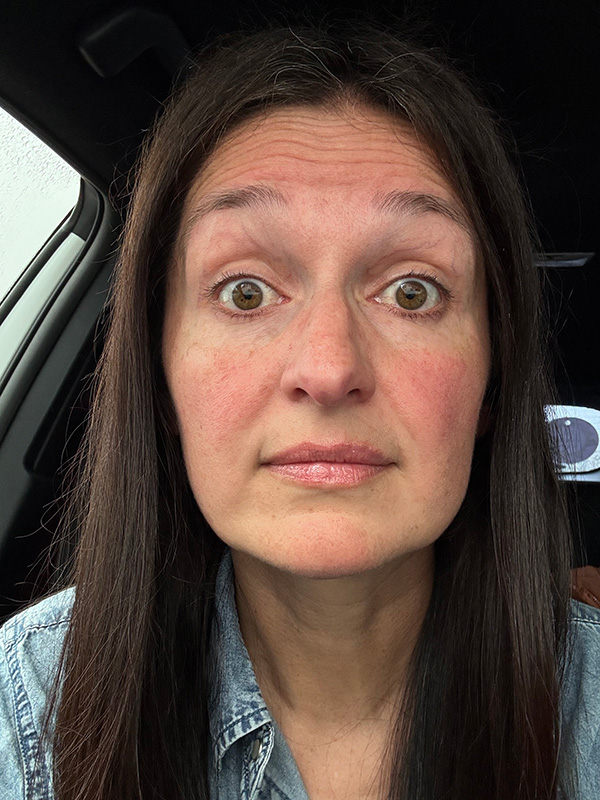
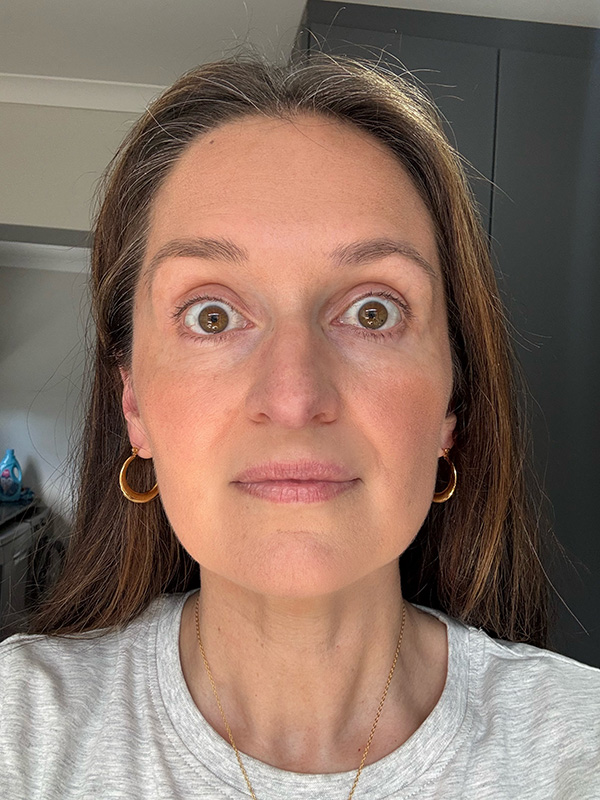
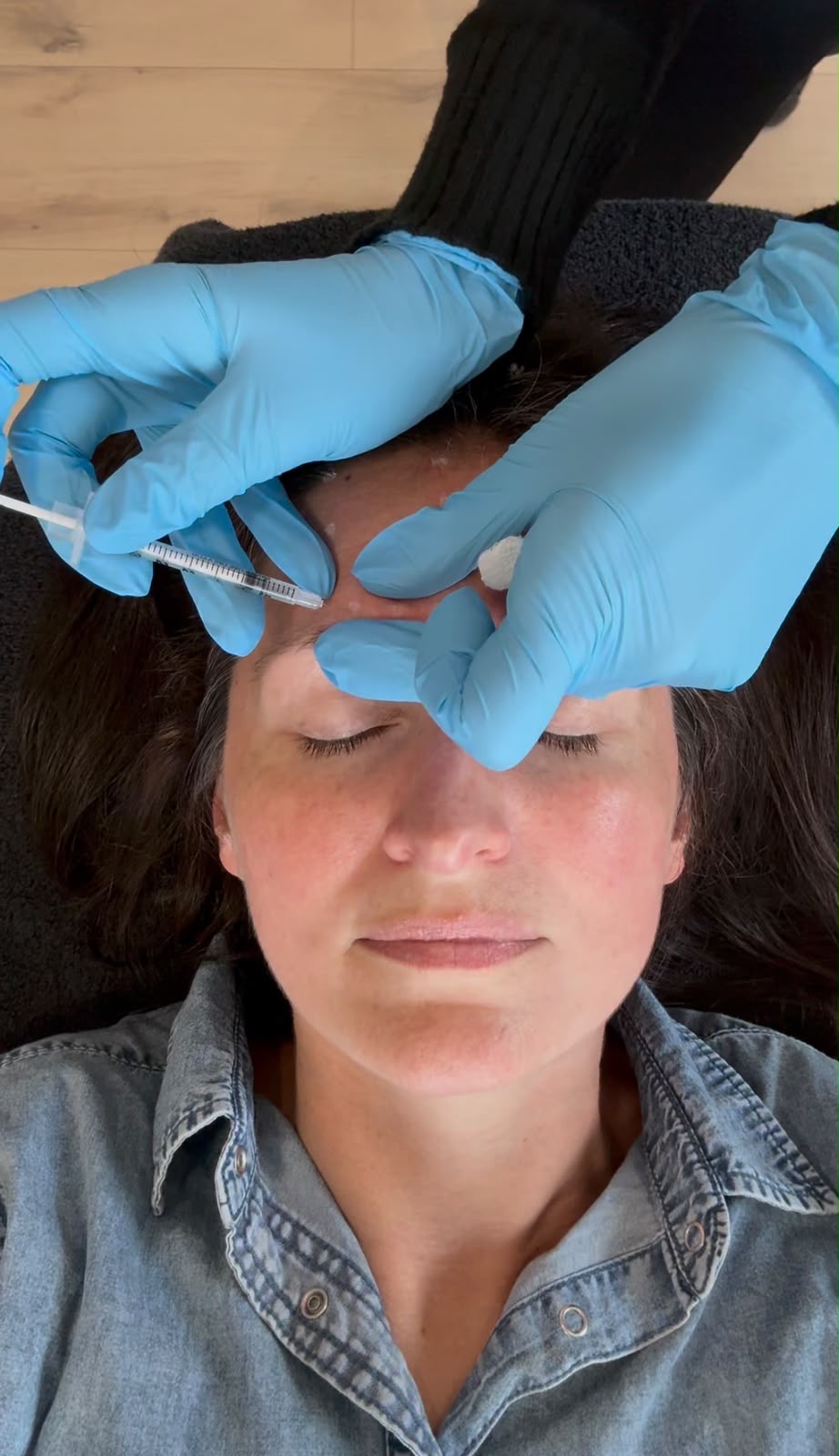
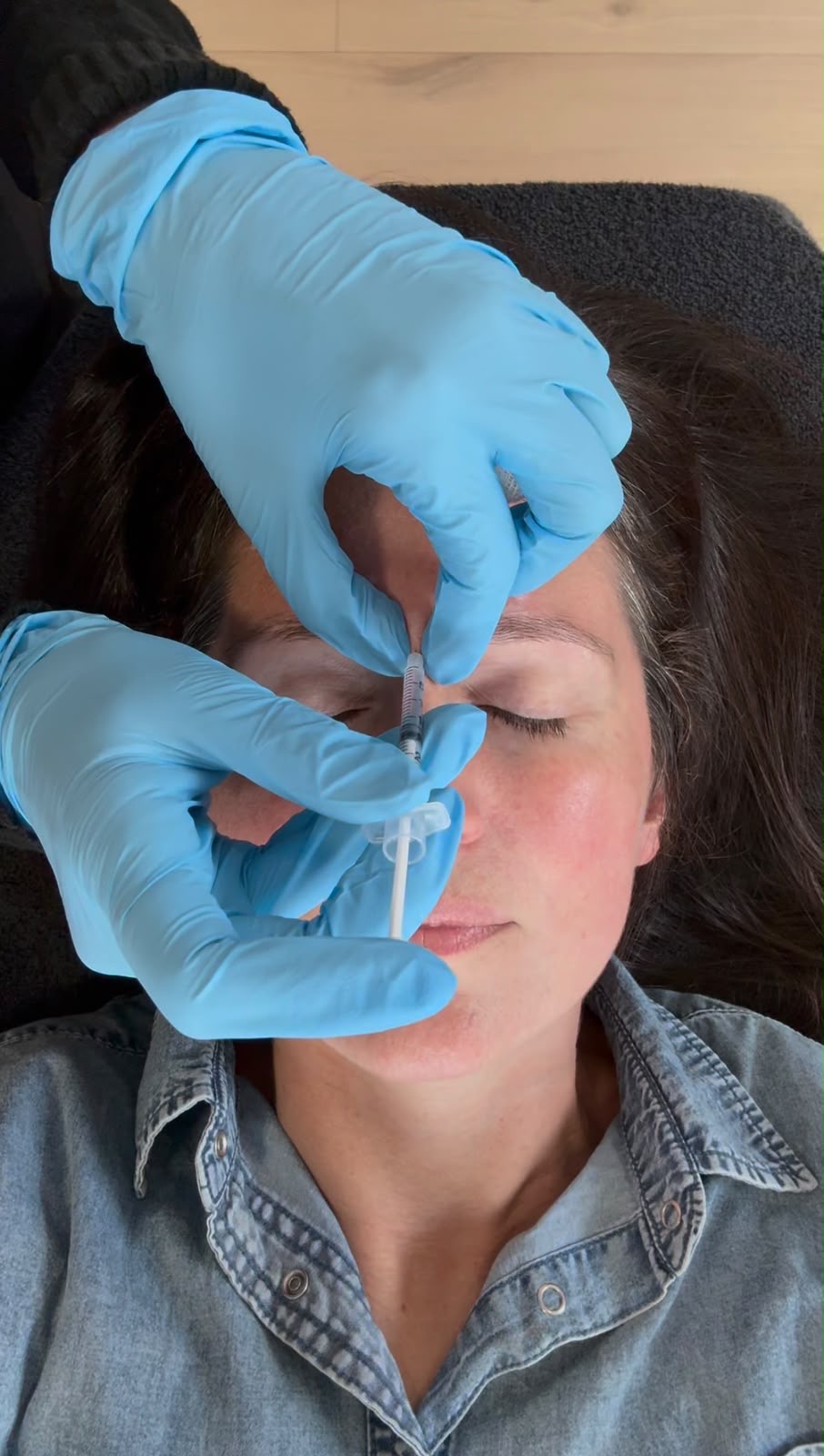
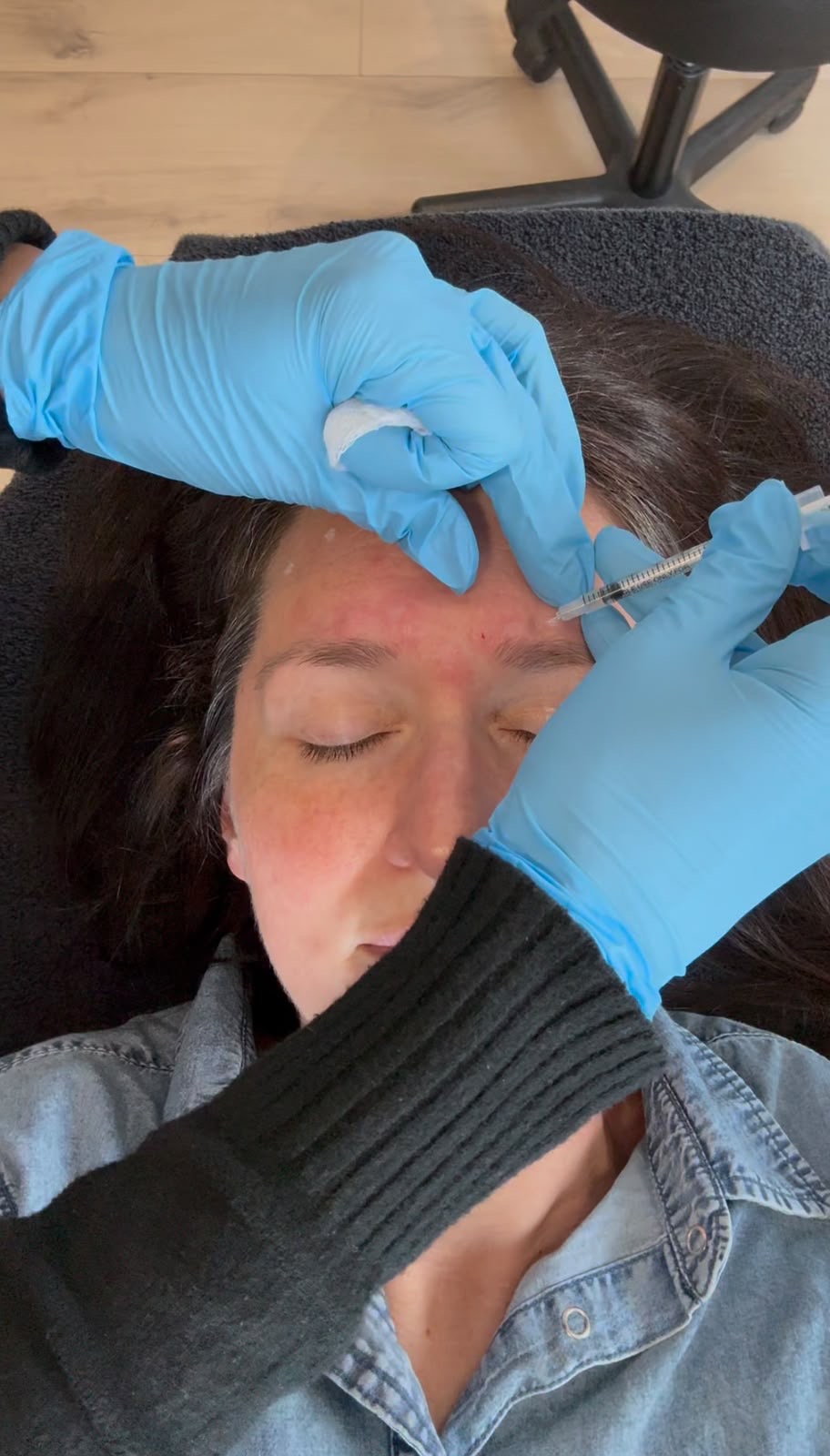
At 40, I recently visited Dr Hutton for my first botulinum toxin treatment in two years, having taken a break during pregnancy and motherhood. My focus was on softening my frown lines and forehead lines, which became more visible to me. I made a conscious decision to leave the laughter lines around my eyes untouched. I actually love them. They are part of how I express myself, and I don’t want to lose that natural character.
For me, the goal wasn’t to erase every line or look younger. I wanted to soften certain areas while still looking like myself. The before and after pictures show the subtle changes and reflect a treatment approach guided by my own preferences rather than a pursuit of perfection.
But motherhood can also change the emotional relationship women have with aesthetic treatments. From a practical perspective, Dr Hutton acknowledges that children take up much of a mother’s attention and time. However, she also sees many mothers deliberately prioritising aesthetic treatments as a form of self-care.
“It reminds them of the importance of self-care and feeling like the best version of themselves, so they can be the best mom they can be, too,” she says. For Dr Hutton, maintaining that sense of confidence matters. “It’s essential not to let that feeling of self-confidence go.”
From “Anti-Ageing” to “Ageing Well”
Dr Hutton says she strongly dislikes the term anti-ageing. “Being in medicine, I am always first and foremost grateful for my own, my family’s and my patients’ health,” she says. “It is such a privilege to age considering what some people I encounter go through.”
For her, “ageing well” is a more appropriate philosophy – one centred around feeling good about yourself rather than attempting to erase every indication that you have lived. The philosophy also extends to the way she approaches aesthetic medicine at 40. “Good aesthetic medicine at 40 means having a great medical-grade home-care routine first and foremost, then having a regular skin routine set out for you by a trusted team,” she explains. Injectables can become the finishing touches – they’re subtle interventions designed to prevent or soften early signs of ageing rather than transform the face. “Looking overdone is not the goal. Looking refreshed and happy is.”
The Danger of Chasing Every Line
There is also an important distinction between wanting to look refreshed and becoming preoccupied with every perceived imperfection. Dr Hutton says one of the biggest mistakes she sees is women assuming injectable treatments are the only answer to ageing. “They don’t realise that regular home care and mild treatments are as, if not more so, important,” she says. She also cautions against allowing aesthetic treatments to become an addiction or obsession.
“As women, we must be careful not to overanalyse our appearance, and just to be grateful that we are alive and well.”
That does not mean ignoring concerns or deciding that aesthetic treatment has no place. Rather, it is about maintaining perspective and recognising that healthy, attractive skin requires more than an injectable treatment.
Why Treating Every Line Becomes Too Much
There comes a point where attempting to remove every single line can actually work against a natural-looking result. “Every year on the planet results in a few more life lines,” Dr Hutton points out. Her goal is not to eliminate every trace of ageing.
“We should embrace them, soften them if we can and aim for healthy, glowing skin. Lines as we age are not the enemy. They are simply a reality of skin ageing.” There is certainly room to improve their appearance, she says, but completely eliminating every line can sometimes look unnatural. It is a philosophy that reflects the broader evolution of aesthetic medicine: less about freezing a face in time and more about helping someone look like a fresher, healthier version of themselves.
Natural-Looking Results Have No Age Limit
Interestingly, Dr Hutton does not believe that natural-looking botulinum toxin treatment at 40 is fundamentally different from achieving a natural result at 25. “We can achieve natural-looking botulinum toxin at any age,” she says. The key is not simply the patient’s age, but their individual anatomy and the way their face moves. For a 40-year-old who wants to look fresher but has no desire to look as though they’ve had work done, Dr Hutton’s advice is reassuringly simple:
“You’re in the right hands and at the right practice, as we don’t either!”
Her recommendation is to focus on skincare and use subtle injectables where appropriate. And if she could change one thing about the way women in their 40s think about botulinum toxin? “Don’t be scared of it! And don’t always think it looks overdone. It’s an awesome little tool we have to make us look and feel refreshed.”
I personally find this such a meaningful shift in the conversation around aesthetic treatment at 40. The objective isn’t to necessarily look 25 again. It is to understand what has changed, treat what can genuinely be improved, preserve movement and expression and accept that some lines are simply part of a face that has lived. And my face has really lived.
Ageing well isn’t about stopping the clock. It’s about making thoughtful choices that allow you to feel comfortable, confident and recognisably yourself as it moves forward.
From Clinic to Bathroom Cabinet
Good aesthetic medicine doesn’t stop at the treatment room. For Dr Hutton, medical-grade home care is the foundation of healthy, well-ageing skin, and that philosophy has now extended to SkinDrop, the new online skincare destination from Hutton Medical.
SkinDrop brings together a carefully curated selection of medical-grade skincare, with products hand-selected and verified by Dr Hutton and the Hutton Medical team based on their clinical experience.
Not sure where to start? SkinDrop also offers a digital skincare assessment. Once completed, the Hutton Medical team reviews your skin profile and current routine before providing a personalised product regimen tailored to your individual goals, with a response within 24 hours. There’s also a SkinDrop loyalty programme, where shoppers earn “Skindrops” with qualifying purchases that can be redeemed for discounts, with additional perks available as members move through the programme tiers.
For Dr Hutton, it is a natural extension of her approach to aesthetic medicine: look after the skin first, understand what it needs and let treatments complement (rather than replace) a good home-care routine.
Explore SkinDrop and take the online skin assessment: huttonmedical.co.za/skindrop.
For more information about Dr Michelle Hutton’s practice in Plettenberg Bay, visit www.huttonmedical.co.za, email reception@huttonmedical.co.za or call +27 44 533 0518.
About the author

Kelli’s no stranger to the beauty biz, with this being her thirteenth year in the industry. She’s got over 100 issues of FAIRLADY Magazine under her belt, where she worked her way up from Beauty Intern to Beauty Editor. She had two loves – beauty styling, along with beauty writing but the main reason for her putting pen to paper each issue was the community she built – full of fellow beauty enthusiasts, sharing everything from their favourite fragrances to their skincare woes. Since leaving FAIRLADY in 2018 to pursue her own business of beauty content creation, consulting, social media management and more, she’s had the honour of working with both local and international brands, creating successful, personalised workshops in the makeup, skincare and fragrance space. She currently manages the marketing of some of SA’s most loved beauty brands and freelances for glossy Modern Beauty, Edgars Beauty Hub and Benefits Magazine. And now, she gets to add Aesthetic Appointment to her proud list of accomplishments.

MBBCh (Wits) | Adv. Dip. Aesth. Med (SA)
Dr Michelle Hutton is a General Practitioner with a special interest in Dermatology and Aesthetic Medicine. She is the founder of Hutton Medical in Plettenberg Bay, which is a comprehensive destination medical and aesthetic centre servicing the Garden Route as well as local and international tourists.
Dr Hutton has a Medical Degree from the University of the Witwatersrand and has completed the Advanced Diploma in Aesthetic Medicine in South Africa. Her passion lies in skincare; she strives to make her patients feel confident in the skin they’re in. She has completed multiple private courses in Aesthetic medicine and has attended multiple local and international congresses so as to stay on top of advancements in the industry.
She is a wife to an avid cyclist, Kevin Evans, and a mother to two beautiful children. Outside the office, she is a keen runner, golfer, and half-skilled cyclist. With Plettenberg Bay being a small town, Hutton Medical has been aiming to provide a professional, high-quality, yet personalised service.