

Many patients request “natural results” when considering aesthetic treatments, but what does that actually mean? According to Dr Candice Knight, the answer is often more complex than patients realise. In this article, she discusses how filters, AI-generated imagery and unrealistic beauty standards can influence expectations, and why natural-looking results should not mean looking unchanged. Instead, they should reflect visible improvement that appears balanced, believable and authentic to the individual. Dr Knight explains why natural results are often the product of careful planning, skin quality and gradual treatment approaches rather than the dramatic transformations associated with looking “overdone”.
When “Natural” Stops Looking Natural
“Natural results” is one of the most requested phrases I hear in the clinic, and also one of the most misunderstood. It sounds safe. It sounds desirable. But the term has been quietly reshaped by filters and editing apps and a steady stream of poor outcomes paraded as good ones, to the point where many patients walking into a consultation can no longer describe what natural actually looks like. They want it. They just cannot tell me what it is. And when they try, what they describe is often something that does not exist in real human biology.
Some of that confusion is fed by the stigma still attached to aesthetic medicine. When patients tell me they are afraid of looking fake, they are not imagining the risk. They have seen the overfilled faces. They have seen the proportions that are slightly off in a way they cannot quite name. Those outcomes are real, but in my view, they are not the inevitable consequence of the treatments themselves. They are the consequence of how the treatments were used. The plane of injection, the choice of product, the volume, and crucially the order in which everything is layered over years rather than weeks – these are the small decisions in the consult room that separate a face that ages well from one that does not.
Visible Improvement, Not No Improvement
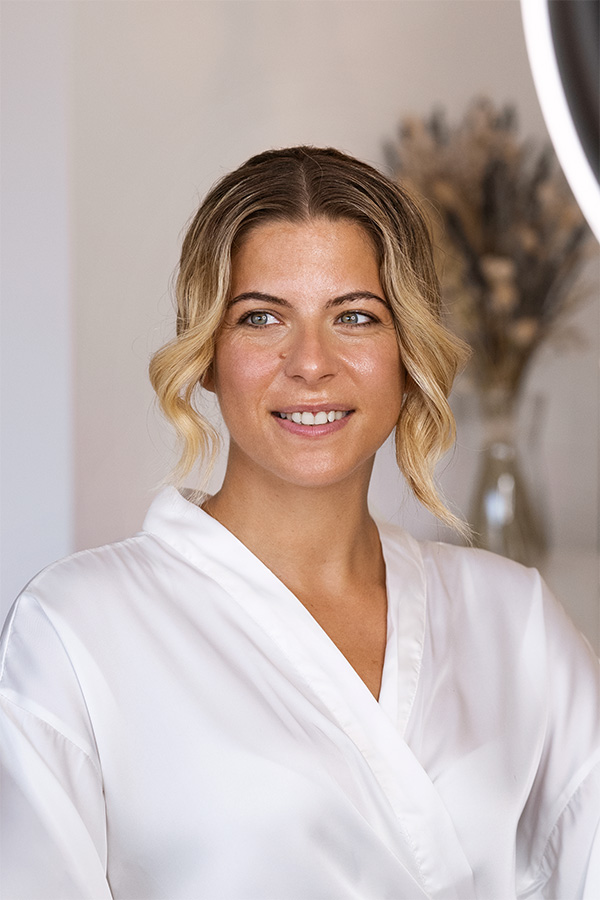
I want to be clear about something I think gets lost in the conversation. Natural does not mean ‘no visible change’. If a patient leaves my clinic looking exactly as she did when she arrived, I have not done my job. Natural results should be a visible improvement. The distinction is that the improvement should look believable, as though it belongs to the person wearing it. Sometimes that means restoring what age or stress or weight loss has taken away. Sometimes it means refining a feature so it looks as though the patient was simply born that way. Neither version is invisible. Both should look like her, just a better, more balanced version of her.
The Influence of Filters and AI
The expectation problem is made worse by what patients bring with them into the room. Filters, AI-generated faces and editorial photography that has been retouched to within an inch of its life. There is no version of real human skin that is permanently pore-less and uniformly luminous in the way those images suggest. Skin has texture, and it has variation, and it reflects light unevenly because it is a living organ rather than a surface. When patients chase the filtered version of themselves, they almost always end up over-treated. And the irony of over-treatment is that it is the fastest route to looking less like yourself, not more.
This is the line I find myself repeating in consultations. Before and afters that look amazing and too good to be true usually are. A dramatic transformation delivered in a single session is, more often than not, a setup for an unnatural result later on. Too much filler placed too quickly, without time for the tissue to respond and without proper reassessment, is what creates the heavy and overdone look people are so afraid of. Good aesthetic outcomes are built gradually. They are not delivered in one appointment.
Why Skin Quality Matters
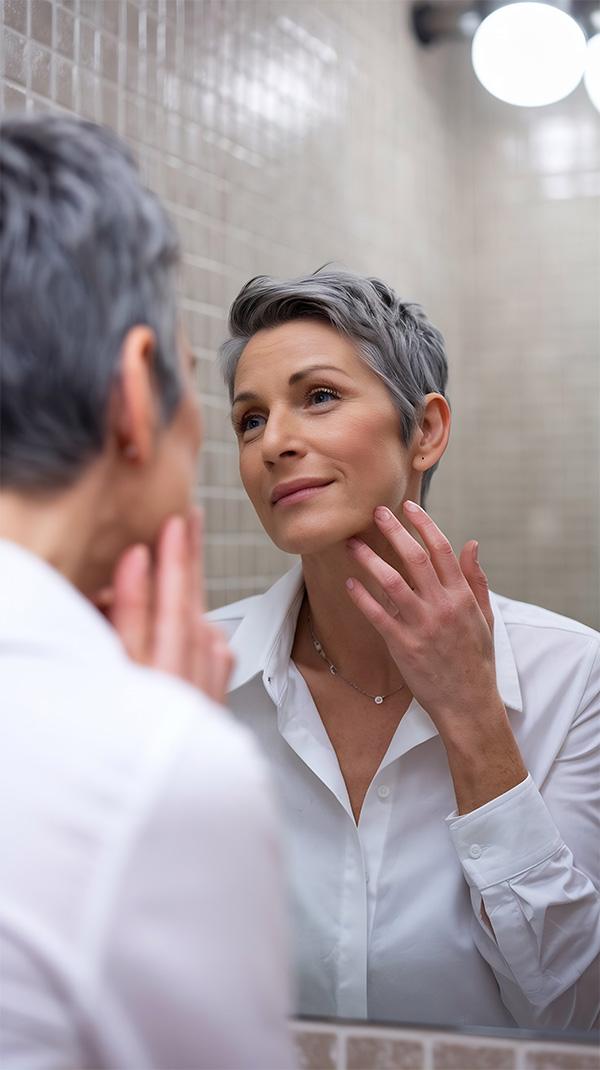
For me, the foundation of natural results is the skin itself. Filler should not exist in isolation. It relies entirely on the quality of the tissue it is placed into. I tell patients that filler needs something to hold onto, and if the overlying skin is thin and depleted, no amount of volume will produce a natural look. It will sit heavily, and it will age badly. This is why I prioritise skin work, and collagen specifically, before or alongside any injectable plan. Collagen is what gives skin the ability to hold shape, and as it declines, that ability disappears with it.
Filler placed into compromised tissue does not correct the loss. It magnifies it. Biostimulation, working with the body to rebuild what time has depleted, is what I believe separates results that look done from results that look like good genetics.
The Treatment Is Not the Problem
The unnatural face is rarely the product of one treatment. It is the product of treating lines before structure, of adding volume without skin support, of repeating the same intervention again and again without stepping back to ask whether it is still the right one. The tool is not the problem. The use of it is.
What Natural Results Really Mean
My goal in the clinic is simple. A patient walks into a room, and people think she looks well. Not that she has had work done. Just that she looks like herself, a refreshed, beautiful version of her. That, to me, is what natural means.
About the author

MBBCh (Wits)
Dr Candice Knight is a medical doctor and aesthetic practitioner based in Johannesburg. She graduated from the University of the Witwatersrand in 2013 and has practised in aesthetic medicine for eight years. She is the founder and lead injector at Skin Deep Aesthetics, where her clinical work follows a skin-first, biostimulation-led philosophy that prioritises tissue quality and long-term outcomes over immediate volume. She is also the founder of AesthetiPro Training Academy, and serves as head trainer for BST Global and for Optiphi Medical Aesthetics, having taught injectors for the past five years. She is a member of the Aesthetic and Anti-Ageing Medicine Society of South Africa (AAMSA). Her work is driven by a commitment to raising standards in aesthetic medicine and to restoring confidence in the patients she treats.