*Sponsored post: Esse Skincare*
As conversations around the skin microbiome continue to grow within aesthetic medicine and professional skincare, terms like ‘probiotic’ and ‘postbiotic’ skincare are becoming increasingly common. While both approaches may offer benefits and support skin function in different ways, they are not the same thing. According to South African skincare brand Esse Skincare, confusion can arise when products marketed as probiotic skincare do not actually contain live probiotics, particularly for consumers specifically seeking these ingredients and their proposed biological mechanisms. In this sponsored article, Esse explores the distinction between live probiotics and postbiotics, how each functions differently on the skin, and why microbial viability remains central to the definition of a true probiotic.”
Most products labelled as probiotic skincare don’t contain live probiotics. They contain postbiotics, which are heat-killed bacteria or fermented extracts that lack the defining characteristic of a true probiotic: life.
This isn’t a technical oversight. It is a fundamental difference in approach that determines what these products can and cannot do for the skin.
If It’s Not Live, It’s Not Probiotic
The World Health Organization defines probiotics as “live microorganisms which, when administered in adequate amounts, confer a benefit on the host”. Viability isn’t optional. It’s central to how probiotics work.
Keeping bacteria alive and stable in a skincare product is challenging, requiring careful formulation and production. As a result, most formulations include dead bacteria and fermented extracts because they are stable and convenient. These are practical choices, simplifying the manufacturing process – and while the right postbiotics can be beneficial, they don’t replace true probiotics.
Because the term “probiotic” has not been regulated in the cosmetics market, brands have used the word freely to describe products with non-living extracts, and consumers can’t clearly understand its true meaning.
How Live Probiotics Work
Your skin evolved with microbial partnerships. These bacteria perform critical functions: they strengthen barrier proteins, regulate immune responses, and suppress pathogenic microbes. When this balance is disrupted by modern life, harsh products, and pollution (amongst others), skin ages faster.
Live probiotics restore this balance in three ways that postbiotics cannot replicate:
- They colonise your skin, occupying ecological niches that would otherwise be available to pathogens.
- They produce beneficial compounds dynamically: lactic acid and short-chain fatty acids to maintain pH, antimicrobial peptides to suppress pathogens, antioxidants to neutralise free radicals, adjusting their output to match changing skin conditions.
- They communicate directly with your skin cells and immune system, sending chemical signals that regulate inflammation, strengthen barrier proteins, and support collagen and elastin networks.
Postbiotics deliver fixed compounds. They can’t colonise, adapt, or interact with your skin’s biology in the same way. This is the difference between active biology and static chemistry.
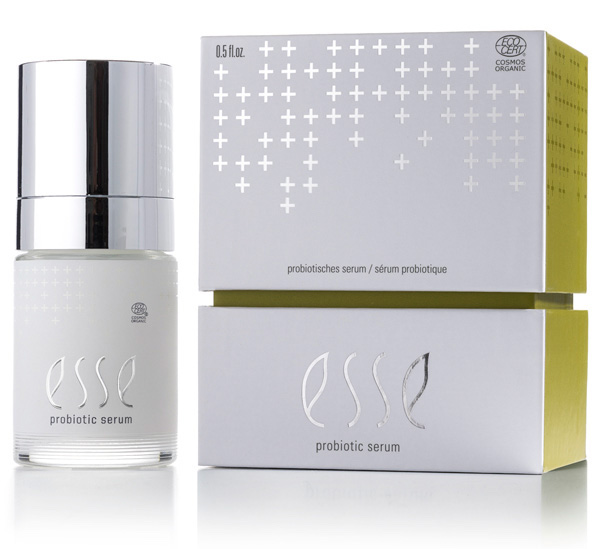
Esse Probiotic Serum. Now enhanced.
Esse launched the world’s first live probiotic serum in 2015.
The formulation has now been re-engineered with the addition of Bacillus coagulans for improved hydration and environmental resilience.
Esse Probiotic Serum uses a water-free, preservative-free lipid matrix designed to maintain microbial viability until application. The live bacteria remain dormant in the oil base and activate on contact with moisture on your skin, delivering their biological benefits exactly when and where they’re needed.
Four Species, Four Mechanisms
Accelerated skin ageing isn’t a single problem. It’s barrier breakdown, chronic inflammation, oxidative stress, and microbial imbalance happening simultaneously.
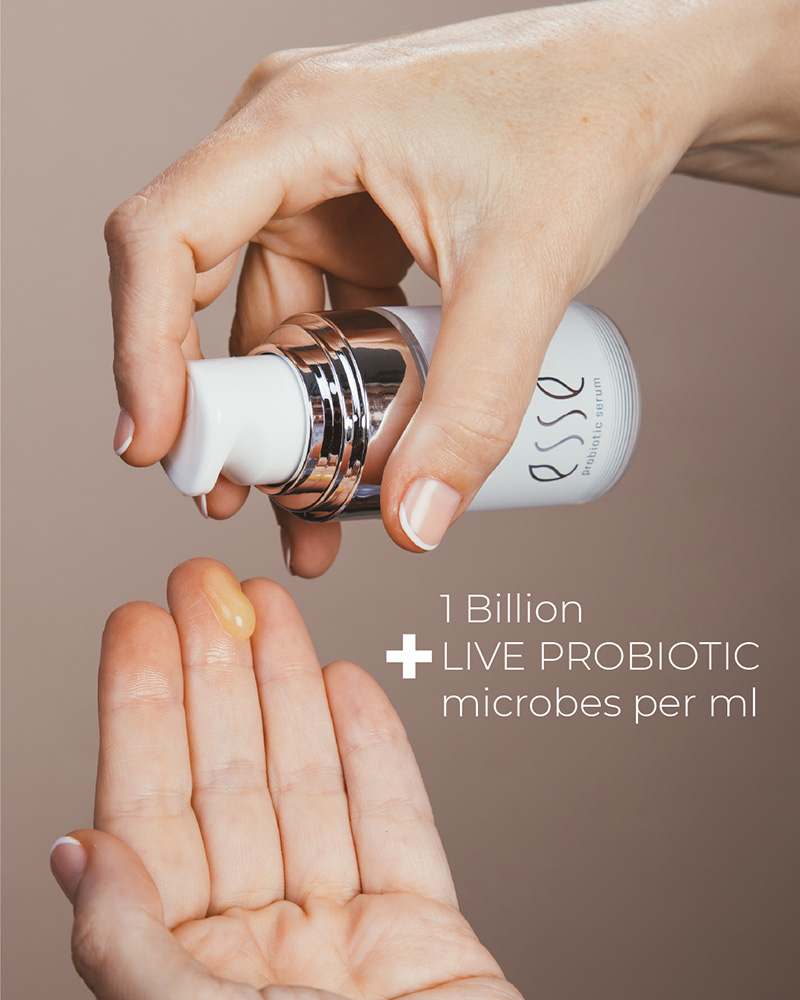
The serum addresses all four with 1 billion CFU/ml of viable bacteria across four species.
- Lactobacillus plantarum strengthens barrier function for more resilient skin and protects collagen and elastin networks.
- Lactobacillus rhamnosus regulates inflammation so it doesn’t degrade skin’s structural proteins or cause ongoing tissue damage.
- Lactobacillus acidophilus defends against oxidative stress by neutralising free radicals from UV exposure and pollution.
- Bacillus coagulans, the newest addition, improves hydration for plumper skin.
Together, these four species work synergistically to target the causes of accelerated ageing, not just the symptoms.
The Results
Independent clinical testing over 28 days showed:
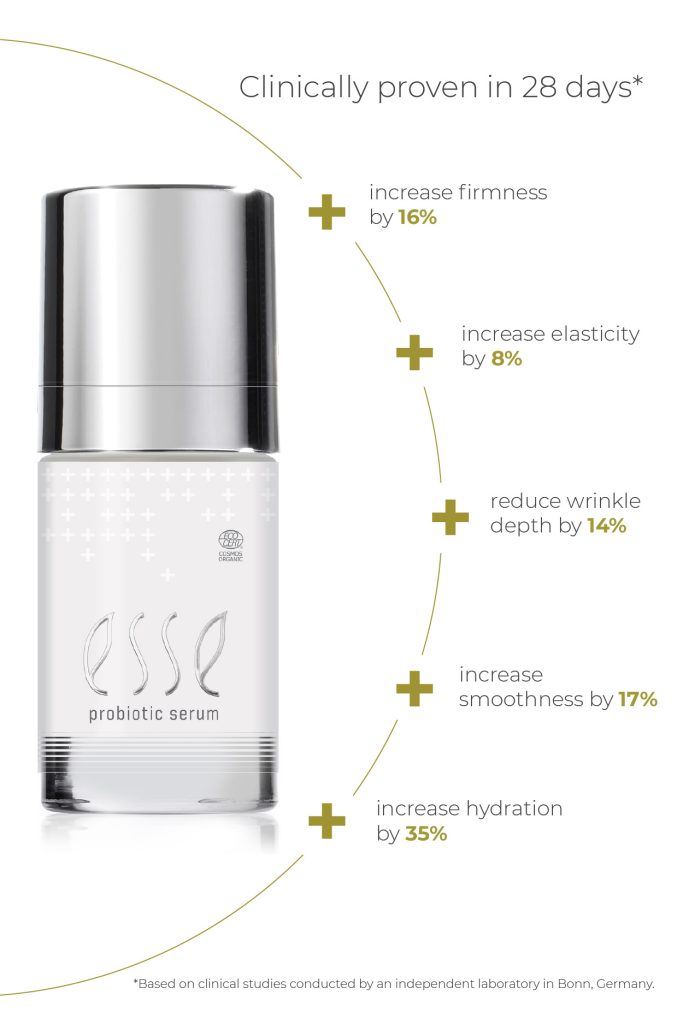
- Firmness improved by 16%
- Elasticity increased by 8%
- Hydration increased by 35%
- Wrinkle depth reduced by 14%
- Smoothness increased by 17%
These structural improvements reflect microbiome restoration and barrier repair. Measurable outcomes by 28 days. This is what active biology delivers.
The Bottom Line
If it’s not live, it’s not probiotic.
Postbiotics have their place. They deliver specific compounds that support skin function. But they’re not the same as live probiotics, and the distinction matters.
Live bacteria colonise, adapt, and sustain effects over time. They restore the microbial partnerships your skin evolved with, targeting causes rather than symptoms through mechanisms that dead bacteria and fermented extracts simply cannot replicate.
Most probiotic skincare isn’t delivering what its labels suggest. Esse Probiotic Serum does. Four species, one billion microbes per millilitre, independently tested, clinically proven.
Skin ages. That’s inevitable. But skin, as it should be – balanced, resilient, functioning optimally – ages differently.
For more information, visit www.esseskincare.com
Follow Esse Skincare on social media
References
- FAO/WHO. Health and Nutritional Properties of Probiotics in Food including Powder Milk with Live Lactic Acid Bacteria. Report of a Joint FAO/WHO Expert Consultation. 2001.
- Esse Skincare. Clinical efficacy study of Probiotic Serum. Independent dermatological testing, Dermatest GmbH. 2024.
- Lebeer S, Oerlemans EFM, Claes I, et al. Topical Probiotics in Skin Health and Repair. Cell Reports Medicine. 2022;3(1):100521.
- Hong JY, Kwon D, Park KY. Probiotics in Dermatology: A Comprehensive Review. Annals of Dermatology. 2025;37(4):259-271.